 Aguas Calientes City Guide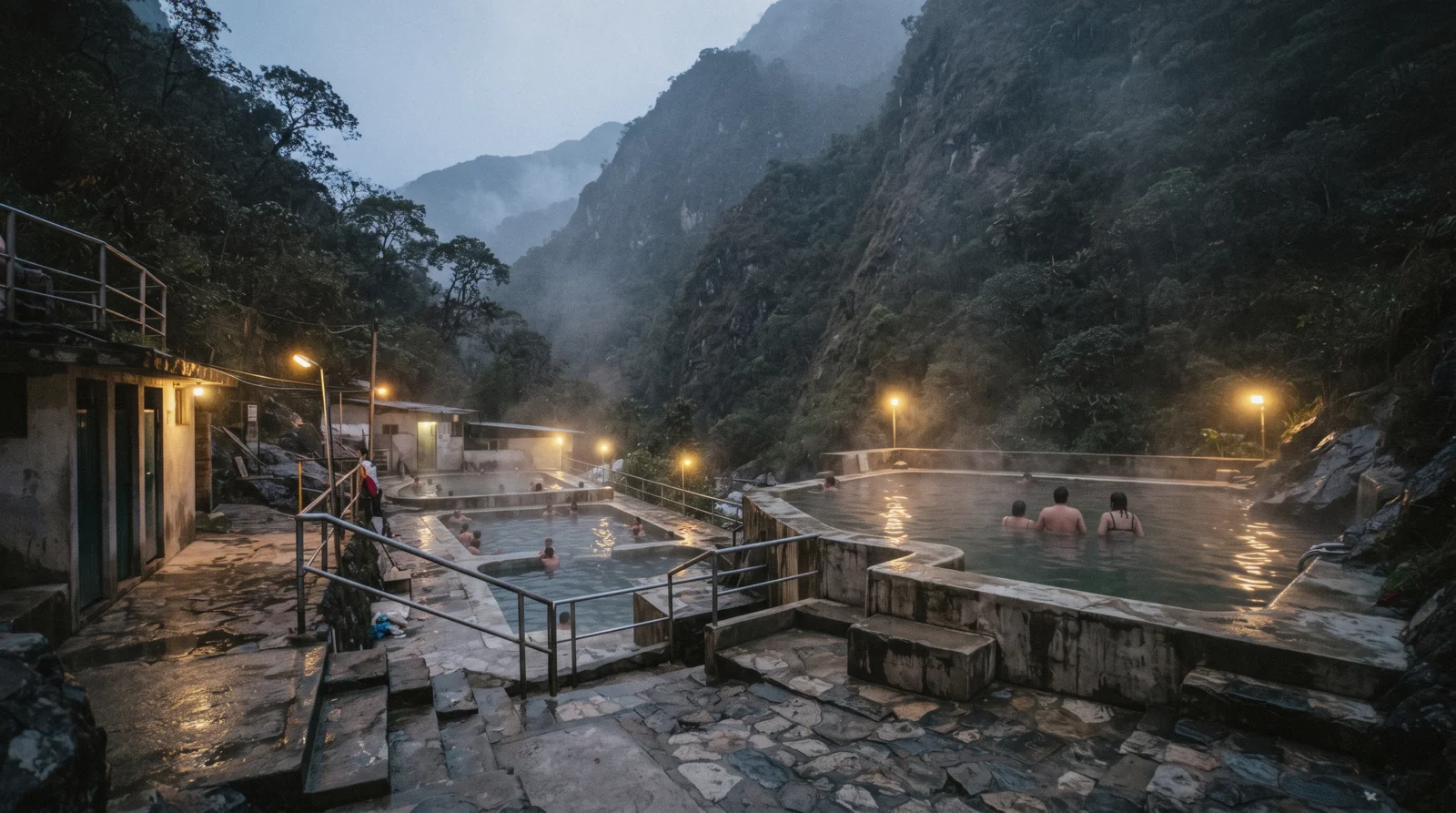
Aguas Calientes Hot Springs: the Banos Termales
The Aguas Calientes hot springs are not just an attraction in this town. They are the reason for its name. Aguas Calientes means hot waters in Spanish, and the Banos Termales at the top end of Avenida Pachacutec are the natural feature behind it. The town's official name is Machupicchu Pueblo, but almost nobody uses it in conversation. Most visitors arrive by train, walk uphill past the market, and find steam rising from concrete pools against a wall of cloud forest. This page covers what the springs are, what they cost, what visitor accounts say about the water and the crowds, and how a soak fits into a day built around Machu Picchu. Bring soles in cash, bring a towel, and manage your expectations about crowds. More on all of that below.
Quick answer The short version on the hot springs
The Banos Termales are the natural hot baths that gave Aguas Calientes its name. They sit at the top of Avenida Pachacutec, about 8 minutes uphill from the main plaza by one travel writer's account. You pay at the door in soles. The municipality publishes no hours or fee online, so come with cash and flexibility.
Key takeaways
- For everything else in town, see our things to do in Aguas Calientes overview
- The springs sit on the same street as the walk described in our Aguas Calientes map
- Planning a soak after the ruins? Start with Machu Picchu tickets
Key facts
Opening hours
| Banos Termales | Not published by the municipality |
|---|
Admission
- Adult
- Not published by the municipality. Paid at the door in soles
Planning it
- Time needed
- Not officially stated
- Address
- Avenida Pachacutec, top end of town, Machupicchu Pueblo (Aguas Calientes), Cusco Region, Peru
Getting In
There is no online booking for the hot springs and no official published tariff. The fee is collected in cash at the entrance. Because there is only one way to buy access, the table below is short. It records what is confirmed and what is not, rather than comparing sellers, because nobody sells the entry remotely.
You buy nothing in advance. You walk in and pay at the door in soles. in Q3 2026
| Option | Price | Hours | Source | Book |
|---|---|---|---|---|
| Entry fee, paid at the doorAny visitor | Not officially published | Not officially published | No municipal page confirms this | Official site |
The Municipalidad Distrital de Machupicchu publishes no page with Banos Termales hours or fees, confirmed by direct site searches, so the amounts circulating on third-party travel blogs are unofficial.
Guided Options Near the Hot Springs
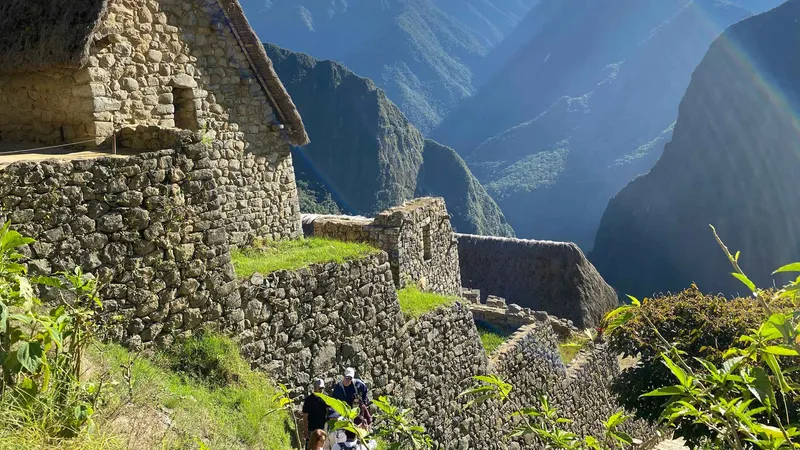
No tour on this site covers the hot springs themselves, since nobody sells entry to them. The closest bookable option is a guide for the ruins, which pairs naturally with a soak afterwards.
 from $30.00
Machu Picchu: Group Guided Tour
This is a guide-only group tour, limited to 10 people, and it does not include the Machu Picchu entrance ticket, so book that separately before your date. Cancel up to 24 hours ahead for a full refund, and pay nothing until your spot is confirmed.
Check AvailabilityPrices, ratings and details are the platform's own. Dollar figures are the listed prices. The platform bills in your account's currency.
What the Springs Are
Why the Town Is Named After Them
Per Wikipedia, the official name of the settlement is Machupicchu Pueblo, but the colloquial Spanish name Aguas Calientes, meaning hot waters, comes directly from the natural hot springs and baths at the site. The naming is not poetic. The thermal water genuinely rises here, in the gorge of the Vilcanota River, and people have come to soak in it long before the first hotel was built.
When railway workers camped in the valley in the late 1920s during construction of the line to the ruins, the springs were already part of the landscape they knew. Today the same water is the town's most accessible attraction and, for many travelers, the only thermal bath they will visit in Peru. It is a small irony of travel that the name everyone uses, Aguas Calientes, describes the water rather than the world-famous ruins an hour up the mountain.
If you want to understand the town beyond the station platforms, the springs are the logical place to start, and they pair naturally with the rest of our things to do list.
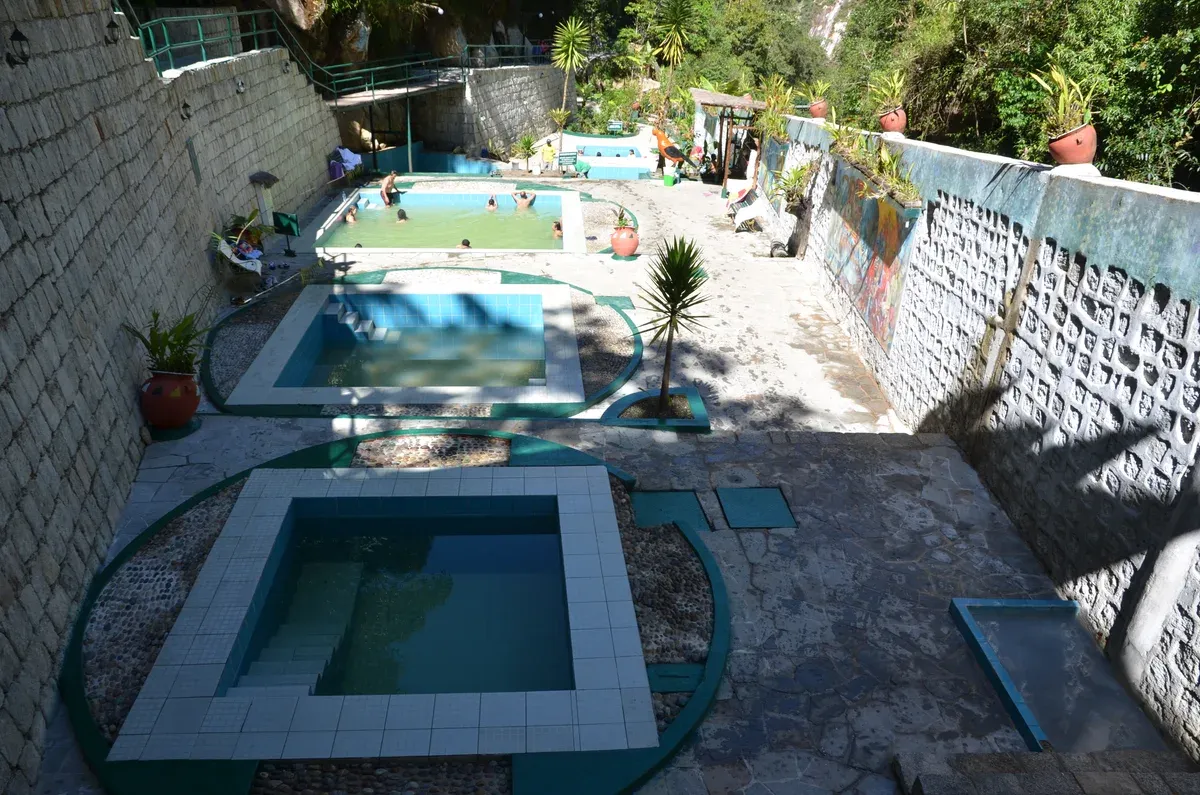
The hot springs above Aguas Calientes. Photo: Pavel Špindler, CC BY 3.0, via Wikimedia Commons
Where They Sit
The Banos Termales occupy the uphill, northeast end of town on Avenida Pachacutec, the long street that runs from the river and the railway station toward the forest. OpenStreetMap community mappers place the entrance at coordinates -13.1509211, -72.5212471, which we use for the map pin below. One travel account describes the walk from the main plaza, Plaza Manco Capac, as about 8 minutes.
That is uphill the whole way, on a street lined with restaurants and shops, so allow more if you are carrying a daypack or moving slowly at altitude. The town itself sits at roughly 2,040 m elevation per Wikipedia, which most visitors arriving from Cusco find mild after the higher Andean plateau. At the top of the street the town gives way to steep green slopes, and the pool complex sits right against that wall of vegetation.
The setting is one of the better things about the visit. The concrete is utilitarian, but the forest directly above the pools is real cloud forest, and the steam in cool evening air gives it an atmosphere no resort pool can fake.
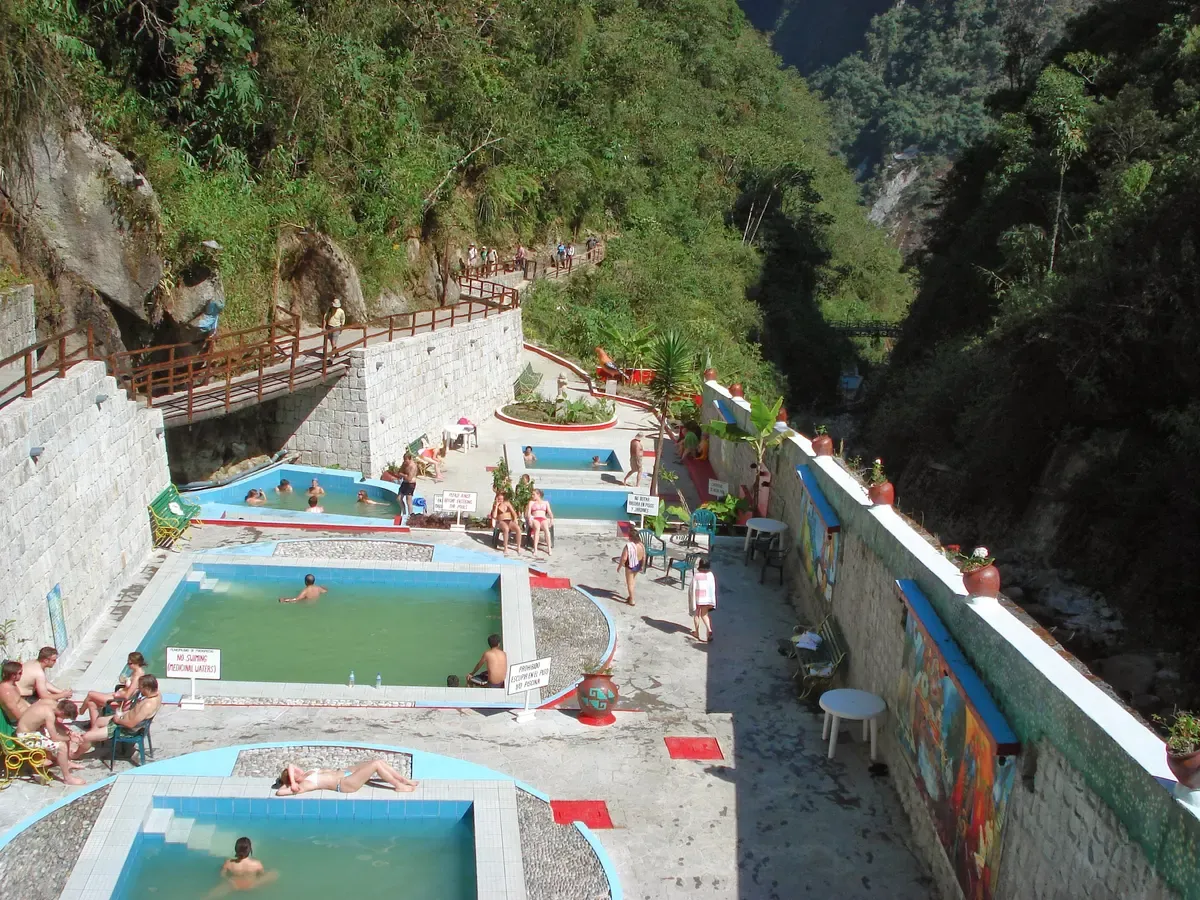
The Aguas Calientes thermal springs. Photo: Robert Meszaros, CC BY 3.0, via Wikimedia Commons
The Water Itself
One travel account reports the pools as supposedly between 38 and 46 degrees Celsius. We hedge that deliberately. No official municipal or health authority page we could find publishes a water temperature for the Banos Termales, and pool temperatures vary by pool and by how recently each has been topped up.
What is safe to say is that the water emerges naturally heated from the ground, that some pools are warmer than others, and that visitor accounts routinely describe a noticeable difference between the hottest and coolest basins. If you have never used thermal baths before, the practical advice is simple. Test with your hand or foot first, start in a cooler pool, and keep hydrated.
The mineral content of the water is described in general terms by visitor blogs but not documented on any official page we located, so we will not repeat specific mineral claims here. Treat temperature figures you read anywhere, including here, as approximate. Your own foot is a better instrument than any blog.
What to Expect
The Practical Details Nobody Publishes
Here is the honest administrative picture. The relevant authority for the Banos Termales is the Municipalidad Distrital de Machupicchu, not the Ministry of Culture, which runs the ruins above. We searched the municipality's pages for hot springs information and found no dedicated page with opening hours or the entry fee.
That is a firm negative finding, reconfirmed by direct searches of the municipal site for the term termales. What this means in practice is that hours, fees and any rules are posted on signs at the entrance rather than online. Payment is in soles, in cash, at the door.
Visitor accounts describe a fee that circulates around 10 to 20 soles depending on the source and sometimes on nationality, but we present that only as an unofficial third-party figure, not a confirmed price. Bring small bills. There is no advance booking system of any kind that we are aware of, and no official online presence for the springs themselves.
If exact current prices matter to your budget, ask at your hotel reception when you arrive, since staff will know the figure posted at the gate that week.
Crowds, Cleanliness and Honest Opinion
Traveler opinion on the hot springs is genuinely mixed, and we would rather you knew that before you go. The most common complaints in visitor accounts are crowding and upkeep. The pools are busiest in the late afternoon, when everyone coming down from an afternoon at Machu Picchu wants exactly the same hot soak you do.
If a busy, sometimes noisy changing area would ruin the experience for you, arrive early in the morning or go late in the evening when day trippers have caught their trains. Some visitors describe the facilities as basic or tired. The complex is a public municipal bath, not a private spa, and it shows.
What keeps people coming anyway is the combination of hot water, cool mountain air and near-zero effort. It is the lowest-commitment activity in a town where the alternatives are steep hikes, and after a long day of walking the convenience is hard to argue with. Go with modest expectations about the buildings and you are likely to leave warm and satisfied.
What to Bring
Bring a towel, a swimsuit and soles in cash, because these are the three things people most commonly find themselves without. Flip flops or sandals make the wet paving more comfortable. A dry bag or a plastic bag for wet swimwear is useful if you are catching a train the same evening, and our page on luggage storage in Aguas Calientes covers where to leave a full bag if you are passing through town between trains.
Bottled water helps, since hot baths dehydrate you faster than you expect, and the town's shops are all within a few minutes' walk. Lockers and changing rooms exist per visitor accounts, though the details and any small locker fee are not officially published. If you plan to eat afterwards, the streets back down toward the plaza are dense with options, and our guide to typical food in Aguas Calientes points you at what to look for.
A soak followed by dinner is one of the better evenings this town offers, and our piece on Aguas Calientes at night develops that idea.
A Small Waterfall Beyond the Pools
One travel account mentions a small waterfall a further 5-minute walk beyond the springs, reachable only by first paying at the springs' entrance. Note that this is a different and much smaller cascade than the Mandor Waterfall on the far side of town, which has its own page and its own access arrangements. If the falls beyond the baths matter to your plans, confirm access and any conditions at the entrance when you pay, since nothing about that path is documented on an official page we could find.
Finding the Springs
The pin below marks the Banos Termales entrance on Avenida Pachacutec, at the top end of town. From the main plaza, head uphill along the same street and keep going until the buildings thin out. The walk is short and the steam is hard to miss.
The pin marks the mapped entrance on Avenida Pachacutec. If you are the kind of traveler who navigates by map, our full Aguas Calientes map shows the springs alongside the station, market and bus stop.
What Is Nearby
Putucusi Mountain
The steep green peak directly across from the springs. Its ladder trail is a serious climb with no official status page, so read our notes before attempting it.
Mandor Waterfall
A larger cascade reached by a riverside walk from the other end of town, on privately run land with its own access terms.
Aguas Calientes Market
The artisan and food market near the station, an easy stop on the way down from your soak for snacks, souvenirs and supplies.
Where This Fits in a Day
After the Ruins
The classic slot for the springs is the late afternoon or evening after visiting Machu Picchu, and for good reason. A standard visit to the Llaqta lasts at most 2 hours 30 minutes from entry, and the last entry slot of the day is at 15:00, with the site closing at 17:30. That means an afternoon ticket leaves you back in town as the light fades and the gorge cools, which is precisely when a hot bath sounds best.
If you hold an entry ticket card for an afternoon circuit, the arithmetic works nicely: ruins, bus down, early dinner, soak, bed. Be aware that the late afternoon is also when the pools are most crowded, so there is a tradeoff between convenience and calm. Note that the springs ticket is entirely separate from anything to do with the ruins, and no tour we list bundles the baths, so you simply pay at the door.
Early Morning and Rest Days
The quieter alternative is to go early. If your Machu Picchu entry is at dawn, the springs are an option the evening before or, if you are staying two nights, on your rest afternoon. Our suggested one day in Aguas Calientes and two days in Aguas Calientes itineraries both leave room for a soak.
The appeal is stronger than the calendar might suggest. Climate data for the gorge shows average daily lows of about 11.0 degrees Celsius in July rising to about 14.5 degrees Celsius in February, so evenings are cool most of the year and the temperature gap between the air and the water is exactly what makes a thermal bath satisfying. On a rainy afternoon, and this valley gets many, a covered hot pool is also one of the few pleasant ways to wait out the weather.
If you are deciding how long to stay in town, our where to stay guide covers hotels, some of which have their own smaller thermal pools if you want a private version of the experience.
Safety and Common Sense
The springs are low risk, but a few sensible habits apply. Hot water plus a long day of hiking plus altitude is a recipe for dizziness if you overdo it, so limit your first soak, drink water and skip alcohol beforehand. The paving around pools is wet and sometimes slippery, so move carefully, especially with children.
Leave valuables in your hotel rather than in a locker if you can. General town safety, including after dark, is covered in our Aguas Calientes safety page. If you are traveling with a large bag between trains, sort out luggage storage first, because wrestling a backpack through a changing room is nobody's idea of relaxation.
None of this is complicated. It is a municipal bath house, and the main skill required is remembering your towel.
Aguas Calientes Hot Springs Questions
Are the hot springs in Aguas Calientes worth it?
For most visitors, yes, with managed expectations. They are a convenient, low-effort hot soak in a town with few alternatives after a day of hiking, and the cloud-forest setting above the pools is genuinely attractive. Visitor opinion is mixed on upkeep and crowding, and the facilities are basic rather than spa-grade. Going early in the morning or later in the evening, rather than at midday or the late-afternoon peak, makes the experience noticeably better.
How much does it cost to enter the Banos Termales?
The municipality does not publish the entry fee online, and we could find no official page stating it. Payment is collected at the door in soles, in cash. A figure circulating in third-party visitor accounts sits around 10 to 20 soles, but treat that as unofficial and possibly out of date. Ask at your hotel when you arrive for the current amount.
Are there hot springs in Aguas Calientes, Peru?
Yes, and they are the origin of the town's name. Aguas Calientes means hot waters in Spanish, and per Wikipedia the colloquial name comes directly from the natural hot springs and baths at the top of town. The settlement's official name is Machupicchu Pueblo.
Are there any thermal baths near the ruins of Machu Picchu themselves?
No. The thermal water is in the town below, not at the citadel. Visiting the ruins requires its own entry ticket and circuits, and the Banos Termales at the bottom of the gorge are a separate attraction with a separate door payment. Most people combine the two by visiting the ruins during the day and soaking in town afterwards.
What are the opening hours of the hot springs?
Not officially published. The Municipalidad Distrital de Machupicchu, which runs the baths, posts no hours online, and no dedicated page with this information was found on the municipal site. Visitor accounts suggest the complex operates through the day and into the evening, but for a reliable answer check the sign at the entrance or ask locally on arrival.
How far are the hot springs from the main plaza?
One travel account puts the walk from Plaza Manco Capac at about 8 minutes, uphill along Avenida Pachacutec. It is a short, safe walk on a street with restaurants and shops the whole way. Allow longer if you are moving slowly at altitude or carrying a bag.
Can I book the hot springs in advance or buy tickets online?
No advance booking is known. There is no official online sales channel for the Banos Termales, and nobody on our tours list sells the entry either. You simply walk in and pay in cash, which is one reason bringing small soles bills matters.
Prices, hours and terms are set by the venue or operator and confirmed at checkout.
We may earn a commission if you book through one of our links, at no extra cost to you. Full affiliate disclosure