 Aguas Calientes City Guide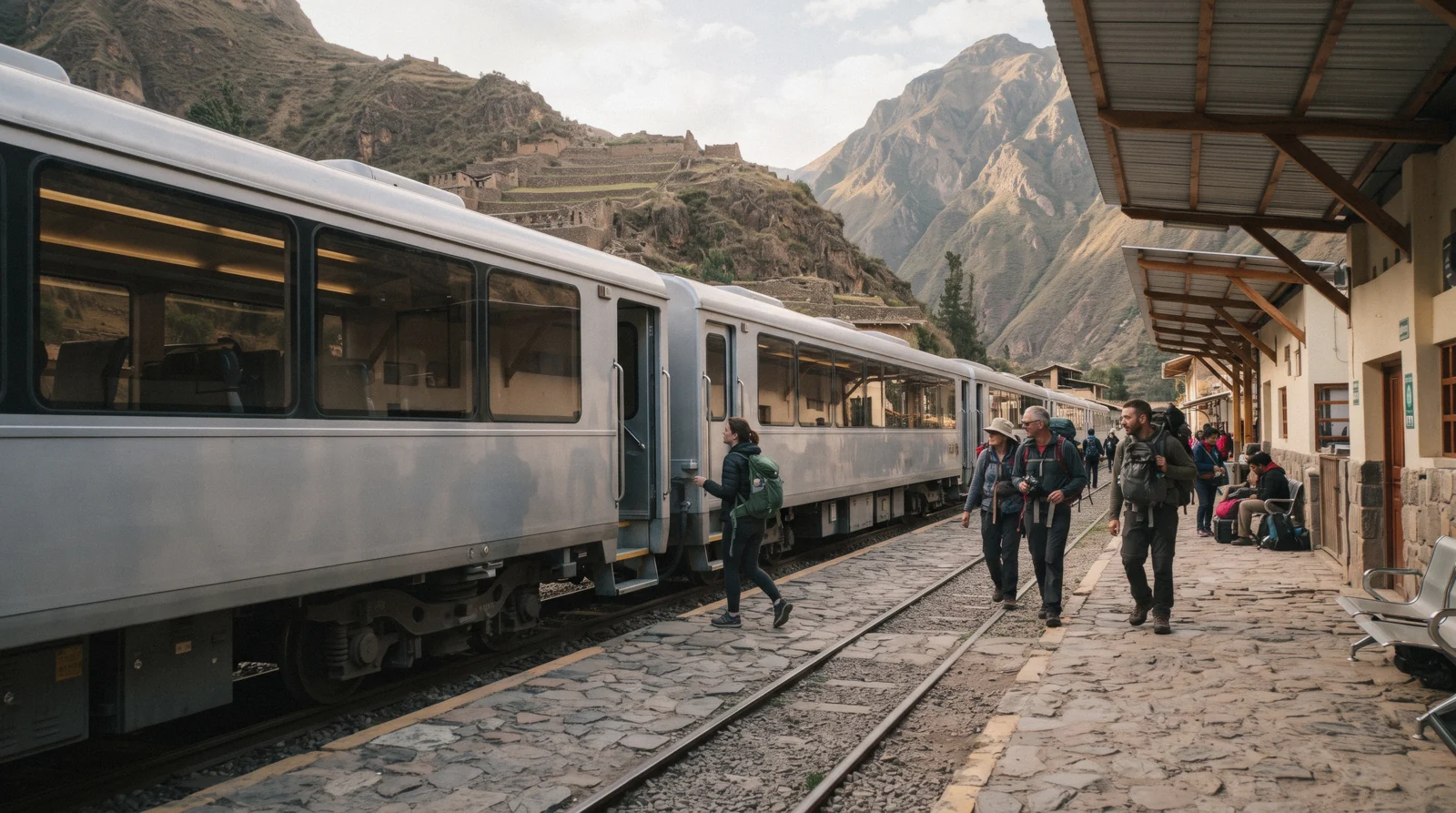
Inca Rail: Service Tiers, Routes and Fares
Inca Rail runs five named service tiers from The Voyager to First Class, on two routes to Machu Picchu (Aguas Calientes) station. This page goes deep on Inca Rail specifically; for the wider overview see train to Machu Picchu, and for the rival operator see PeruRail.
Quick answer Five tiers, two routes, live fares
Inca Rail is one of the two train companies serving Machu Picchu Pueblo (Aguas Calientes). It runs two routes, Ollantaytambo to Machu Picchu and a bimodal bus-plus-train service from Cusco, across five service tiers from The Voyager (Economy) up to First Class and The Private. On its own booking widget for the Ollantaytambo route, one-way fares start at $59 (from US$59) for The Voyager and $81 (from US$81) for The 360 Degree, varying by date and departure time. The train ticket never includes the Machu Picchu entrance ticket.
Key takeaways
- Full detail on PeruRail, the other operator, and the Hiram Bingham luxury train live on their own pages, and PeruRail or Inca Rail compares them head to head.
- One-way fares on the Ollantaytambo route start at US$59 for The Voyager, US$81 for The 360 Degree and US$105 for The Prime, all varying by date.
- One piece of hand luggage per ticket, max 8 kg / 17 lb and 118 linear cm / 46 linear in. Extra bags need the paid Luggage Custody Service at the Ollantaytambo office only.
- Entrance to the citadel is a separate purchase, see Machu Picchu tickets, and our own bookable train is Trip Tour's train to Machu Picchu.
Inca Rail's Five Service Tiers
Inca Rail sells five named services, and every one of them runs on both of its routes to Machu Picchu Pueblo. That matters when you compare, because the tier you pick decides the experience far more than the route does. The two routes, covered on this page below, share the same car types, the same catering levels and the same luggage rules. What changes between tiers is window space, food, music, boarding priority and, at the top end, privacy.
The entry point is The Voyager (Economy). It offers spacious seating, panoramic windows and ambient Andean music. There is no included meal. Passengers buy snacks and beverages made with local ingredients onboard, so bring cash or card for the trolley if you want anything beyond the ride itself. For most day-trippers this is all you need. The journey to Machu Picchu Pueblo is a scenic one regardless of tier, and the big saving over the upper tiers buys you the same track, the same valley views through the same panoramic windows and the same arrival station.
One tier up sits The 360 Degree (Premium Economy). This is the tier people usually mean when they talk about the open-air train experience. It adds an open-air observatory car where you can stand between carriages and watch the Vilcanota valley close in around you. The windows themselves are extra-wide with UV protection, live traditional music plays onboard, and there is digital entertainment. Unlike The Voyager, snacks and drinks are included in the fare. If you are travelling with children or anyone who wants to move around and take photos rather than stay seated, the observatory car is the main reason to pay the difference.
The Prime (Premium Economy) sits at the top of the Premium Economy bracket but sells at the highest observed one-way fares of the three bookable tiers on the Ollantaytambo route. It is aimed at people who want the journey to feel like a meal out. You get a dedicated dining car, priority boarding, live Andean music, a VIP transfer and a curated Andean-inspired menu. Note the asymmetry with The 360 Degree: The Prime does not advertise the open-air observatory car, it advertises food and service. If standing in the open air matters to you more than a sit-down meal, The 360 Degree is the better pick. If comfort and catering matter more, The Prime is.
Above the Premium Economy pair is First Class. This is Inca Rail's fine-dining service: wine pairings, a bar-lounge car, live saxophone performances and a Wine Ceremony with a three-course gourmet menu. It is a very different proposition from the other tiers. You are paying for a restaurant carriage with a view, not just transport. Inca Rail's own site does not publish a public fare table for First Class on the same basis as the three lower tiers, so expect to request or configure the fare through its booking flow rather than see a simple from-price.
The fifth tier is The Private, a chartered or private-car option. Inca Rail's own site gives limited public detail on this tier, so treat it as a request-based product: you would contact the company to arrange a carriage for a group rather than buy a seat. We will not guess at prices or capacity here because the company does not publish them.
A common confusion worth clearing up now: the luxury train most people have heard of, the Belmond Hiram Bingham, is not an Inca Rail product. It is operated by Belmond and runs on PeruRail's tracks. If you are comparing First Class against the very top of the market, see our Hiram Bingham page, but keep the two companies separate in your head when you book. For a wider look at the whole market, start with our Train to Machu Picchu overview or our PeruRail or Inca Rail comparison.
A quick way to hold the five tiers in mind:
| Tier | Class | Standout feature | Food and drink | |---|---|---|---| | The Voyager | Economy | Panoramic windows, ambient Andean music | Not included, snacks and local-ingredient drinks sold onboard | | The 360 Degree | Premium Economy | Open-air observatory car, extra-wide UV-protected windows, live traditional music, digital entertainment | Snacks and drinks included | | The Prime | Premium Economy | Dedicated dining car, priority boarding, live Andean music, VIP transfer | Curated Andean-inspired menu | | First Class | Premium | Bar-lounge car, live saxophone, Wine Ceremony | Fine dining with wine pairings, three-course gourmet menu | | The Private | Chartered | Private carriage, limited public detail | Not stated |
Routes and Stations
Inca Rail runs two routes to the Machu Picchu Pueblo station, which is the station in the town itself, the place most people still call Aguas Calientes. No train goes to the citadel gate. Every passenger, on every company, arrives in the town and then continues up by bus or on foot. Our bus to Machu Picchu and Aguas Calientes to Machu Picchu pages cover that last leg in detail.
The first and most-used route is Ollantaytambo to Machu Picchu. This is a direct train service. Most visitors reach Ollantaytambo by road from Cusco or from somewhere in the Sacred Valley, then board here for the run down the river valley. SERNANP's own access table puts the commercial train from Ollantaytambo to Machu Picchu Pueblo at about 60 km and about 2 hours 10 minutes. That is SERNANP's figure for the corridor, not an Inca Rail claim, and it is a useful planning number: it means you should be at Ollantaytambo with real buffer time before your departure, since the town is small but the boarding process, ticket checks and luggage rules all take time.
The second route is Cusco to Machu Picchu, sold as a bimodal service. Bimodal means bus plus train: Inca Rail puts you on a bus from Cusco to Ollantaytambo, then transfers you to the train for the rest of the trip. This is the option for people who would rather not arrange their own road transport to Ollantaytambo. The trade-off is that you hand over schedule control. The bus departure sets your train, so leave generous margins for Cusco traffic and for anything else that might delay the morning. Inca Rail's own site does not state exact journey durations for either route, so plan using the SERNANP figure for the rail leg and your own judgement for the road leg.
Neither route requires you to change trains partway. The bimodal option is a coordinated bus-to-train transfer at Ollantaytambo, not a second ticket. Your ticket covers the whole journey from Cusco.
Once you step off at Machu Picchu Pueblo station you are in the town centre, minutes from the river, the craft market, restaurants and the bus depot for the ride up to the entrance. Our things to do page covers what to do in the town if you are staying the night, which many travellers now do to catch an early circuit the next morning. Remember that the train ticket does not include the Machu Picchu entrance ticket. That is a separate purchase from the Ministry of Culture, with its own circuits, time slots and rules, all covered on our Machu Picchu tickets page.
If you would rather book a bundled option than assemble the journey yourself, we list one bookable train product on this site: Trip Tour's train to Machu Picchu at $130.00 (US$130.00), lasting 3 hours 30 minutes, with pickup included, availability limited, and a full refund if cancelled at least 24 hours before start. To be clear, this is our bookable train option sold through GetYourGuide. It is not an Inca Rail-branded service tier, so do not expect Voyager or 360 Degree carriages. It simply gets you the scenic train ride toward Aguas Calientes with a pickup, which suits travellers who want one booking rather than a DIY chain of bus plus train.
Fares and Luggage Rules Compared
Inca Rail does not publish a fixed price list. What it shows is a live booking widget where fares move with date, demand and departure time. The figures below are a live, date-dependent snapshot of one-way from fares for the Ollantaytambo to Machu Picchu route, taken from Inca Rail's own booking widget. Always read them as 'from' prices. They vary by date and will change.
| Service tier | Class | Observed one-way from fare (Ollantaytambo route) | |---|---|---| | The Voyager | Economy | US$59.00 to US$85.00 across different departure times | | The 360 Degree | Premium Economy | US$81.00 | | The Prime | Premium Economy | US$105.00 to US$133.00 across different departure times |
Three things jump out of that table. First, the gap between The Voyager's cheapest and priciest departures is real money, US$26.00 one way per passenger. Shifting your departure time by an hour or two can save more than the price of lunch. Second, The Prime consistently quotes above The 360 Degree, so you are paying for the dining car, priority boarding, VIP transfer and menu, not for a higher window class. Third, First Class and The Private do not appear with simple from-prices in the same way, so budget those as request fares.
Remember that a one-way fare is half your rail cost for a standard out-and-back day trip. Most visitors ride up and ride back the same day or the next morning, so mentally double whatever figure you settle on, then add the bus up from the town and the entrance ticket.
Now luggage, because this catches people out. Inca Rail's carriages and vans have no on-board luggage racks. The rule is one piece of hand luggage per ticket, maximum 8 kg / 17 lb, maximum 118 linear cm / 46 linear in, measuring height plus length plus width. That is a backpack, handbag or briefcase category of bag. Full-sized suitcases do not fit the rule.
If you are carrying more, Inca Rail offers a paid Luggage Custody Service. Note the restriction carefully: it is available only at the company's Ollantaytambo ticket office, nowhere else. There is no custody option in Cusco for the bimodal service's Cusco end, so travellers starting in Cusco with big bags should plan around that. The practical pattern most people use is to leave large luggage at their Cusco or Sacred Valley hotel and travel with one compliant bag each.
Figures current in Q3 2026.
Which Tier Fits Your Trip
Pick The Voyager (Economy) if you are watching budget and your day is built around the citadel rather than the train. The windows are panoramic, the music is on, and you can buy local snacks onboard. Everything that makes the rail corridor special is outside the window, not inside the carriage.
Pick The 360 Degree if the journey itself is part of the day for you. The open-air observatory car is the single biggest experience upgrade on the fleet, the UV-protected extra-wide windows help at midday altitude, and included snacks and drinks remove one small friction. The observed from-fare of US$81.00 sits reasonably close to The Voyager's upper range, so on some dates the upgrade costs less than you would expect.
Pick The Prime if you want to eat well en route and start the trip calmly. Priority boarding, the dedicated dining car, the VIP transfer and the Andean-inspired menu make it the tier for anniversary trips or for travellers who have already seen the views and now want the service. At observed from-fares of US$105.00 to US$133.00 it is the most expensive of the three openly quoted tiers.
First Class is for the food and the occasion: wine pairings, a bar-lounge car, live saxophone and the Wine Ceremony with a three-course gourmet menu. If what you actually want is the absolute top of the luxury-train market, be aware that the Belmond Hiram Bingham is a different company running on PeruRail's tracks, and read our Hiram Bingham page before deciding.
The Private is a group tool. If you are chartering, contact Inca Rail directly, since public detail is limited.
For the wider picture of how the train fits into the trip, see train to Machu Picchu and our roundup of things to do in Aguas Calientes. Whichever tier you choose, the sequence is the same. Buy the entrance ticket first, because time slots sell out and the train without a slot is useless. Then buy the train to match your entry time, allowing for the SERNANP estimate of about 2 hours 10 minutes on the Ollantaytambo leg and the bus ride up from town. Pack one bag within the 8 kg / 17 lb and 118 linear cm / 46 linear in limit. Arrive early. If you want someone else to handle the assembly, Trip Tour's train to Machu Picchu bundles pickup and the ride at $130.00 (US$130.00) with free cancellation up to 24 hours before start, availability permitting.
Book the Train
Our own bookable train card for the route.
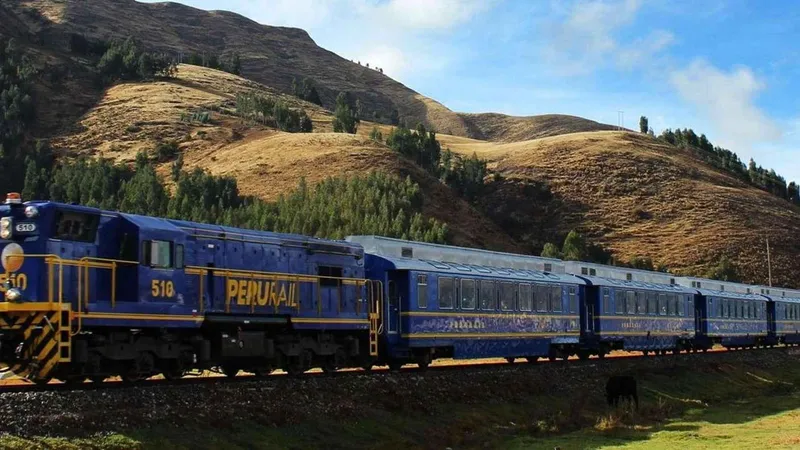 from $130.00
Train to Machu Picchu
Trip Tour books the scenic train ride from Cusco toward Aguas Calientes, the gateway to Machu Picchu, with pickup included. Cancel up to 24 hours ahead for a full refund, and note that availability is limited on this route.
Check AvailabilityPrices, ratings and details are the platform's own. Dollar figures are the listed prices. The platform bills in your account's currency.
Related Pages
Inca Rail: Questions
What is Inca Rail?
Inca Rail is one of the two train companies serving Machu Picchu. It runs two routes to Machu Picchu Pueblo (Aguas Calientes) station: a direct train from Ollantaytambo, and a bimodal bus-plus-train service from Cusco, where a bus covers Cusco to Ollantaytambo and the train continues from there. It sells five service tiers, from The Voyager (Economy) through The 360 Degree and The Prime (Premium Economy) to First Class and The Private. Its rival is PeruRail, and the two are compared in our PeruRail or Inca Rail guide.
What is Inca Rail's The Voyager like?
The Voyager is the entry-level Economy service. It runs on both Inca Rail routes and offers spacious seating, panoramic windows and ambient Andean music. No meal is included. Passengers buy snacks and beverages made with local ingredients onboard. Inca Rail's booking widget showed one-way from fares of US$59.00 to US$85.00 on the Ollantaytambo route across different departure times, varying by date.
What is the Inca Rail 360, or The 360 Degree?
The 360 Degree is Inca Rail's Premium Economy tier. It adds an open-air observatory car, extra-wide panoramic windows with UV protection, live traditional music and digital entertainment. Snacks and drinks are included. Observed one-way fares on the Ollantaytambo route started at US$81.00, varying by date. If you want to stand outside and photograph the valley during the ride, this is the tier with the observatory car.
How long is the train ride to Machu Picchu with Inca Rail?
Inca Rail's own site does not state exact journey durations for either of its routes. SERNANP's access table puts the commercial train from Ollantaytambo to Machu Picchu Pueblo at about 60 km and about 2 hours 10 minutes. For the bimodal Cusco service, add your own allowance for the road leg from Cusco to Ollantaytambo, since no official figure for that leg is given by Inca Rail.
Does my Inca Rail ticket include entrance to Machu Picchu?
No. The train ticket does not include the Machu Picchu entrance ticket. Entry is sold separately by the Ministry of Culture with hourly time slots, circuits and daily capacity limits, and it often sells out before trains do. Buy the entrance first, then match your train to your entry slot. Our Machu Picchu tickets page explains the system.
See Inca Rail Before You Book
Reviews across Inca Rail's tiers, from Economy to First Class.
Is the Train to Machu Picchu Worth It? Inca Rail Review
A recent rider review of the Inca Rail experience.
Video: Arie & Gary TravelsTren a Machu Picchu: Descubre The 360 de Inca Rail
Inca Rail's own look at The 360 Degree service.
Video: Inca RailEverything You Need to Know About Riding First Class on Inca Rail
A detailed First Class ride report.
Video: Passport SaintPrices, hours and terms are set by the venue or operator and confirmed at checkout.
We may earn a commission if you book through one of our links, at no extra cost to you. Full affiliate disclosure