 Aguas Calientes City Guide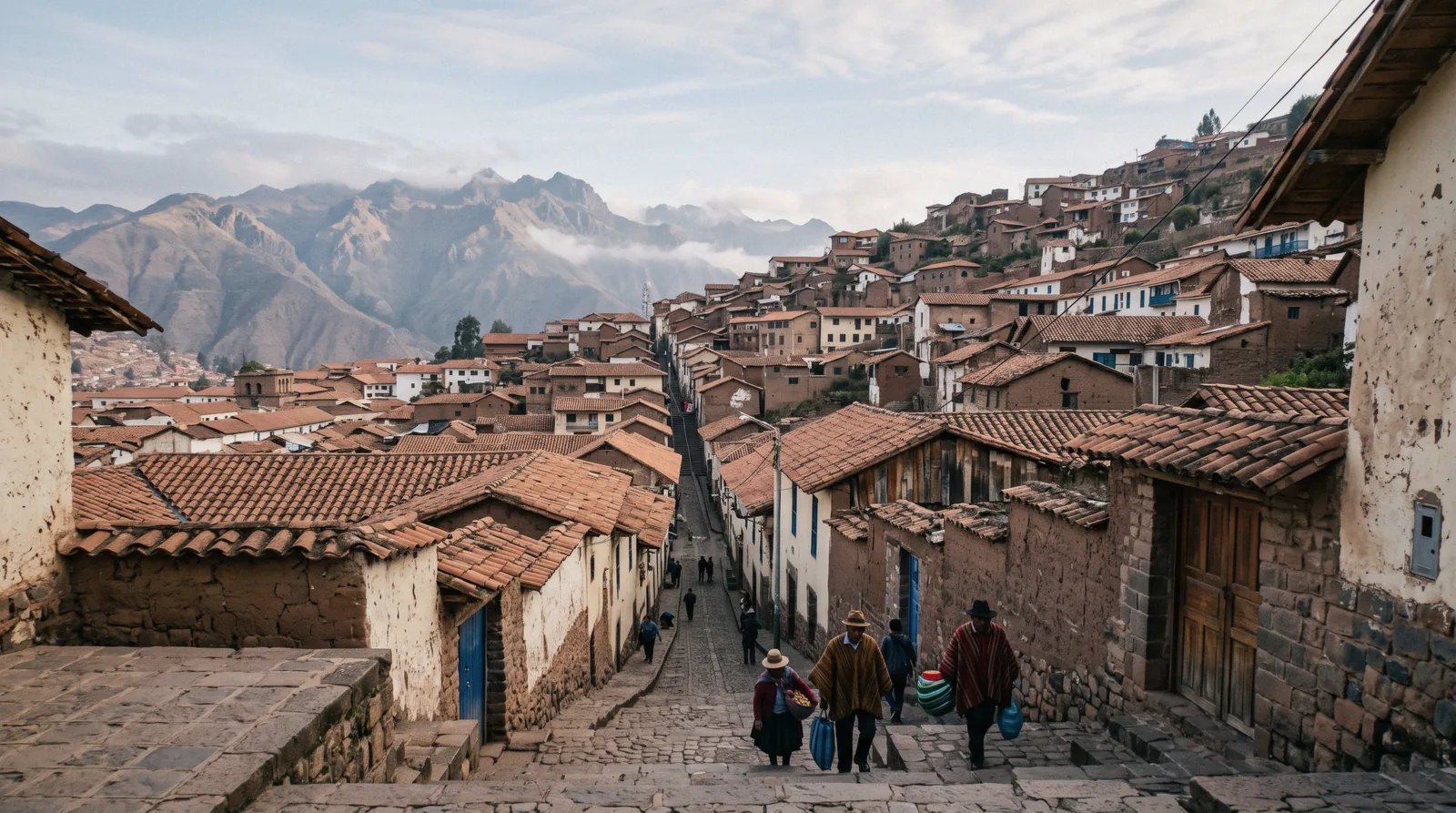
Cusco, Peru: the City You Came From and the City You Go Back To
Most travellers meet Cusco twice. First as the launch point, where they land, acclimatise and pick up the train toward Machu Picchu. Then again at the end, when the gorge town of Aguas Calientes releases them back up the line. This page covers Cusco from Aguas Calientes as that second meeting: the ride back from Aguas Calientes, the altitude jump waiting at the top, and what a spare day in the city is worth. It is not a full Cusco guide. The focus stays on the return leg, the 1,359 m climb back up, and the rail product you can book right here.
Quick answer The return leg in short
The commercial train from Cusco to Machu Picchu Pueblo (Aguas Calientes) covers 111 km in about 4 h 10 min on SERNANP's published table, and PeruRail's own FAQ gives 3 h 30 min from Poroy or 4 h 30 min from San Pedro station. Cusco sits about 1,359 m higher than Aguas Calientes, our sum, so expect the altitude to feel sharper when you get back.
Key takeaways
- Full breakdown of the leg on Cusco to Aguas Calientes
- Book the return rail leg with the Train to Machu Picchu card
- Why the gorge feels easier than the city at Aguas Calientes altitude
Key facts
Opening hours
| City | Open at all hours, no gate–n/a |
|---|
Closed not applicable
Admission
- Adult
- No separate entry fee; the train card sold here is US$130.00
Planning it
- Time needed
- Half a day for the return train, plus a night or a spare day if the altitude hits
- Book ahead
- Optional — walk-up usually fine
- Address
- Cusco, Cusco Region, Peru
Getting Back to Cusco
The ride from Aguas Calientes back to Cusco is the same line in reverse, about 111 km on SERNANP's published table. This site sells one rail product for the leg, the card below.
There is one bookable rail product below. For every other departure, fares and service class, our dedicated page for the leg and PeruRail's own site cover the full live timetable.
| Option | Price | Covers | Booking | Book |
|---|---|---|---|---|
| Train to Machu Picchu with TRIP TOUR, 3 h 30 minTravellers who want the Cusco rail leg booked in one step, with pickup included | US$130.00 | Scenic train ride toward the Machu Picchu gateway with pickup included. Entry not included, train ticket only | GetYourGuide card, full refund if cancelled at least 24 hours before start | Check Availability |
PeruRail's FAQ splits the time by station: 4 h 30 min from San Pedro station (5 minutes from downtown Cusco) and 3 h 30 min from Poroy station (20 minutes out). Figures current in Q3 2026.
Book the Return Train
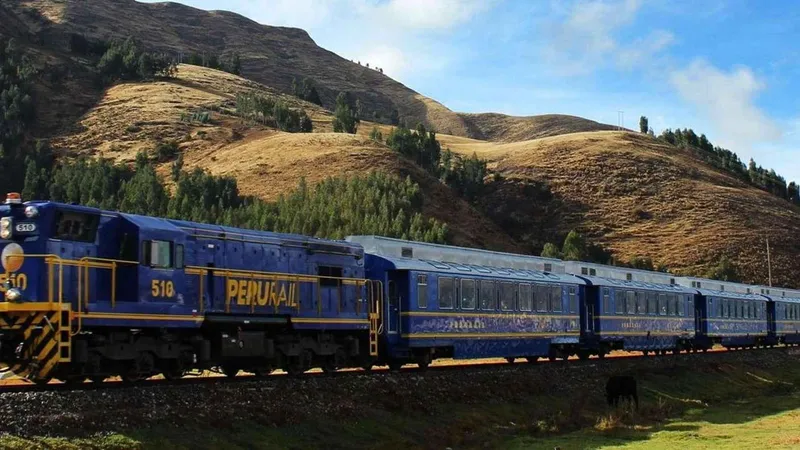
This page sells one rail product, the TRIP TOUR card below. It runs the scenic train from Cusco toward the Machu Picchu gateway with pickup included, takes 3 h 30 min on the card and costs US$130.00. Cancel up to 24 hours ahead for a full refund. For everything else on the line, fares, stations and timetables, see PeruRail and Inca Rail, or the full Machu Picchu train breakdown.
 from $130.00
Train to Machu Picchu
Trip Tour books the scenic train ride from Cusco toward Aguas Calientes, the gateway to Machu Picchu, with pickup included. Cancel up to 24 hours ahead for a full refund, and note that availability is limited on this route.
Check AvailabilityPrices, ratings and details are the platform's own. Dollar figures are the listed prices. The platform bills in your account's currency.
The Altitude Jump Back Up
1,359 m in one ride
Cusco sits at 3,399 m (11,152 ft). Aguas Calientes sits at about 2,040 m. That is a gap of about 1,359 m, our sum from the two elevations, and the train hands you all of it in a single afternoon.
Many travellers feel worse in Cusco than they did in the gorge town below. The pattern is common enough that acclimatising in Cusco before descending to Aguas Calientes, or resting a night after coming back up, is standard advice. Read the fuller picture at Aguas Calientes altitude before you decide how to sequence the trip.
What that means for your last day
If you have a flight out of Alejandro Velasco Astete International Airport, code CUZ, the day after your return, treat the altitude as a real cost. Sleep low the night you come back if your itinerary allows it, or build in the spare night in Cusco instead of the gorge. Headaches and breathlessness on the walk from San Pedro station up into the historic centre are normal at 3,399 m, especially after days at 2,040 m.
Water, a slow pace and no tight connections are the simple fixes. If your body handled the descent badly in reverse, the train can be rerouted or split at Ollantaytambo, which sits lower at 2,792 m and makes a gentler first stop on the way up.
Cusco, Briefly
Capital before the conquest
Cusco was founded around 1200 CE as the capital of the Kingdom of Cusco and became the capital of the Inca Empire from the 13th century until 1532. That makes it the political centre of the largest state in pre-Columbian America for roughly two centuries before Francisco Pizarro's forces arrived on 15 November 1533. The Spanish city was reestablished on 23 March 1534, built directly over the Inca one.
The Plaza de Armas and the general shape of the historic centre sit on that colonial overlay, which is why the street pattern reads the way it does. Background only here, since this site does not carry a Cusco sightseeing guide.
Earthquakes That Reshaped the City
Per Wikipedia, Cusco suffered major earthquake damage in 1650 and again in 1950. Both events forced rebuilding on top of the existing Inca foundations, which is part of why so much surviving Inca stonework sits below later colonial and republican-era walls: the lower courses proved more earthquake resistant than what the Spanish built above them, so they were kept and built onto rather than replaced. If you notice a wall that changes character partway up, from massive fitted stone to smaller colonial masonry, that seam is usually a trace of one of these rebuilds.
It is a useful thing to know before you walk the historic centre on a return day, even without a sightseeing itinerary attached.
World Heritage city today
UNESCO inscribed the City of Cusco as a World Heritage Site in 1983, joining the neighbouring sanctuary of Machu Picchu on the list. The 2017 census counted 428,450 residents, so it is a working regional capital, not a museum town. It serves as the transport hub for everything on this site: the airport with code CUZ, the road to Ollantaytambo, and the rail line that ends in the gorge at Aguas Calientes.
When your Aguas Calientes to Machu Picchu morning is done and the return train rolls you back, this is the city that absorbs you.
Source: Wikipedia (Cusco), checked 2026-09-25.
What a Spare Day in Cusco Is Good For
Recover first, then wander
A spare day after the return train is best spent at low output. The altitude jump means the first hours are for eating, drinking water and walking slowly around the Plaza de Armas and the historic centre, which you can cover on foot without a plan. This site does not publish a Cusco sightseeing list, so treat the city itself as free time rather than a checklist.
Once you are back down in the gorge on a future pass, our own things to do in Aguas Calientes page takes over, and the Aguas Calientes tours hub covers everything bookable there.
Use the buffer day
A buffer day is not idle time, it is insurance. The home facts pack records a fire and rockslide near km 107 on 4 August 2026 that suspended PeruRail and Inca Rail service on the Ollantaytambo to Machu Picchu line, the exact line your return train uses. Rail disruption of that kind strands travellers with same-day connections and spares the ones with a slack day.
See transport strikes and suspensions for how these events work. If you are structuring the whole visit around a buffer, the Machu Picchu 2 day tour and the Aguas Calientes in 2 days pattern both build one in.
The Airport at the End of the Line
Cusco's Alejandro Velasco Astete International Airport, code CUZ, is where most itineraries that started in Cusco also end. Because the airport sits at the same 3,399 m as the rest of the city, a flight scheduled soon after the return train gives you no chance to settle before you are back in the air, which is a second reason a buffer night helps more than it costs. If your next stop is Lima or another lower-altitude city, the descent by air resolves the altitude symptoms faster than staying at height ever would, but that is a decision for the day, not something to plan around in advance.
Cusco on the Map
Near Cusco
Ollantaytambo
The town 72 km northwest of Cusco where most trains to Aguas Calientes start. Inca street grid, fortress terraces and the standard Inca Trail trailhead.
Day trips hub
Every trip this site covers from Aguas Calientes, including the return rail leg and the Sacred Valley stops on the way back toward Cusco.
Aguas Calientes Altitude
Why the gorge town feels easier to breathe in than Cusco, and what changes when you climb back up to 3,399 m.
Cusco Questions
How long is the train from Aguas Calientes back to Cusco?
SERNANP's published table gives the Cusco to Machu Picchu Pueblo commercial train as 111 km and about 4 h 10 min one way. PeruRail's own FAQ puts San Pedro station to Machu Picchu station at 4 h 30 min and Poroy station to Machu Picchu station at 3 h 30 min, so the return leg matches the outbound in reverse.
Why do I feel the altitude more in Cusco than in Aguas Calientes?
Cusco sits at 3,399 m and Aguas Calientes at about 2,040 m, a gap of about 1,359 m, our sum. Coming back up the gorge puts you back into thin air after days at lower elevation, so symptoms often return on the last day. Resting the night you arrive back is a common pattern.
How much does the return train cost?
The bookable card on this page, the Train to Machu Picchu with TRIP TOUR, is US$130.00 for the 3 h 30 min scenic ride with pickup included, and it offers a full refund up to 24 hours ahead. PeruRail does not publish one fixed one-way fare on its own site, it directs buyers to its live booking system, so no single operator figure is quoted here.
Where does the train arrive in Cusco?
PeruRail's FAQ names two Cusco-side stations. San Pedro station is 5 minutes from downtown Cusco, and Poroy station is 20 minutes out. Which one your return service uses depends on the departure you booked, so check before arranging transport to the airport or a hotel.
Should I fly out of Cusco the same day I come back from Machu Picchu?
It is tight. The train alone runs 3 h 30 min to 4 h 30 min, and you land back at 3,399 m with a transfer to Alejandro Velasco Astete International Airport, code CUZ, still to make. A buffer night is safer, and rail disruption on the line, like the 4 August 2026 suspension near km 107, gives a second reason.
What is Cusco itself?
The capital of the Cusco Region with a 2017 census population of 428,450, founded around 1200 CE and the Inca capital until 1532. UNESCO inscribed it as a World Heritage Site in 1983. This page treats it as your return city, not a sightseeing destination, so for the gorge side of the trip start at the Aguas Calientes tours hub.
Cusco on Video
CUSCO PERU 2025 4K Walking through the Capital of The Inca Empire | Cusco Walking City Tour
A walk through the historic centre most travellers pass through on the return leg.
Video: World Wanderings: 4K Walking ToursCusco Walking Tour 4K | Inca Capital Street Walk (No Music, Ambient Sound)
A quieter street-level look at the city above the gorge.
Video: Loop AmbienceCusco Street Market Walking Tour | Peru’s Food, People & Chaos [4K HDR]
A market walk for anyone spending a spare day in the city.
Video: World Wanderings: 4K Walking ToursPrices, hours and terms are set by the venue or operator and confirmed at checkout.
We may earn a commission if you book through one of our links, at no extra cost to you. Full affiliate disclosure