 Aguas Calientes City Guide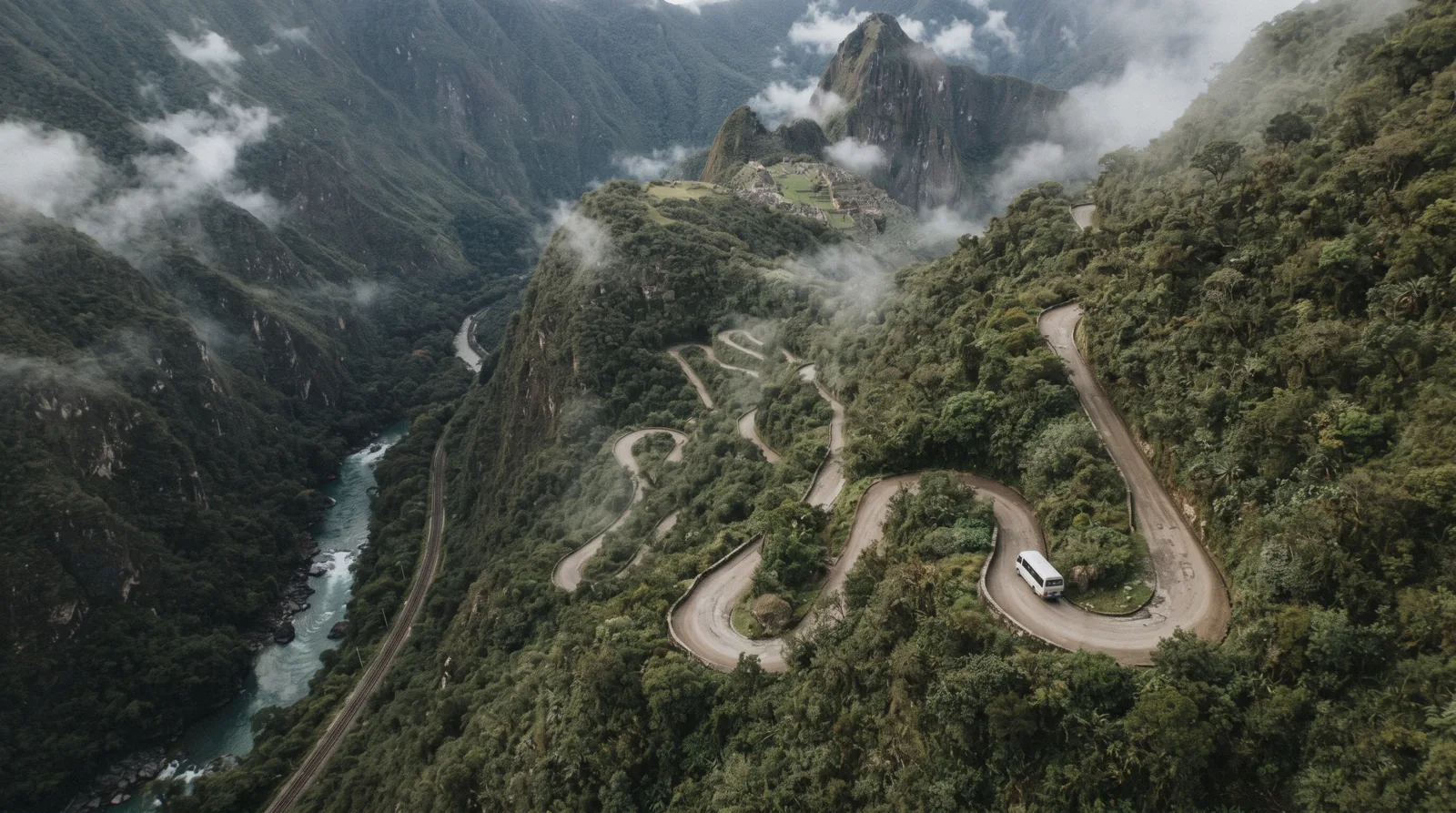
Aguas Calientes to Machu Picchu: Getting Up the Last Climb
Getting from Aguas Calientes to Machu Picchu is the last decision of the trip. Once you are in town, officially Machupicchu Pueblo, at about 2,040 m, one choice remains: how to cover the climb up to the Machu Picchu gate at 2,430 m. Ride the bus up the Hiram Bingham road in about 25 minutes, or walk the signed path in about 90 minutes. This page lays out both options side by side. For the bus ticket options in depth, see bus to Machu Picchu.
Quick answer Bus or walk, the timing and the prices
From Aguas Calientes, the town at the end of the train line, you reach the Machu Picchu gate two ways. The shuttle bus climbs the Hiram Bingham road, a switchback dirt and gravel track, in about 25 minutes. The signed walking path takes about 90 minutes, a figure from Wikipedia rather than an official source, and climbs roughly 390 vertical metres from the town at about 2,040 m to the gate at 2,430 m. Most visitors ride up and walk down, or ride both ways. You need an entrance ticket with a timed slot either way, and no road connects the town to anywhere else, so this last stretch is unavoidable.
Key takeaways
- The bus up takes about 25 minutes, the walk takes about 90 minutes, over about 390 m of climbing. Full bus detail is on bus to Machu Picchu.
- A bus transfer costs US$19.00 and the entrance ticket costs US$43.00, booked separately. The full circuit breakdown is on Machu Picchu tickets.
- Entry works by hourly slot from 06:00 to 15:00, with 2 hours 30 minutes inside on standard circuits and no re-entry.
- For the rest of the town, see things to do in Aguas Calientes.
Bus or Walk: The Decision
Aguas Calientes, officially Machupicchu Pueblo, sits at about 2,040 m on the Vilcanota River. No road reaches it from outside. You arrive by train or on foot at the end of a trek, and from the town there is exactly one job left: get up to the gate at 2,430 m.
That is a climb of about 390 m through cloud forest, and you can do it on the shuttle bus or on your own legs.
The bus is the choice for almost everyone with a fixed entry slot. The ride takes about 25 minutes on the Hiram Bingham road, a switchback dirt and gravel track, and it leaves you near the entrance with energy to spare for the circuits inside. The walk takes about 90 minutes, a figure from Wikipedia rather than an official source, and no official source states the exact distance, the trail surface condition or whether the path is lit, so treat all three as unpublished.
A sensible frame: if your ticket slot is early, if rain is falling, or if you want your legs fresh for Waynapicchu or Machupicchu Mountain, take the bus up. The path is a good option for the descent, when the altitude is on your side and you are not racing a clock. Many travellers do exactly that, bus up, walk down, and finish at the site museum near Puente Ruinas at the base of the climb.
If you ride, two booked options cost US$19.00 each: Peru & U's bus transfer for one-way or round-trip, non-refundable but skipping the ticket-booth line, and Peru Trekkers' official round-trip bus with buses running all day and a full refund up to 24 hours ahead. You still need the entrance ticket itself, sold separately as MachuPicchu.Center's entrance ticket for US$43.00, all sales final.
For a much deeper look at the bus itself, schedules context and the road, see bus to Machu Picchu. This page sticks to the decision and the timing.
Riding the Bus Up
The bus station sits a short walk from the train platforms, and the ride to the gate takes about 25 minutes up the Hiram Bingham road. The road is dirt and gravel, narrow, with a dozen or more hairpin bends stacked above the river. It is a scenic ride through the cloud forest, and from the upper switchbacks you get glimpses down onto the rooftops of the town you just left.
Booking ahead matters because the ticket-booth queue in town can be long in the morning. Peru & U's bus transfer reserves your one-way or round-trip ticket and emails it to you, so you walk past the booth straight to boarding. It costs US$19.00 and is non-refundable once booked, so pick your date carefully.
If your plans might shift, Peru Trekkers' official round-trip bus is the more forgiving option at the same US$19.00. Buses run all day and you board flexibly, and you can cancel up to 24 hours ahead for a full refund. It also avoids the long lines in Aguas Calientes.
One honest gap: the bus operator publishes no first or last departure time, so any precise timetable you read elsewhere is guesswork. What is certain is that buses serve the route through the visiting day, and the last entry slot is 15:00. Full details, pricing history and the road itself live on bus to Machu Picchu.
Walking the Path Up
A signed walking path leaves the town and climbs to the gate in about 90 minutes. That duration is a Wikipedia figure, not an official one, and it is worth repeating that no official source publishes the exact distance, the state of the trail surface or whether the path is lit. Plan as if unlit, which means walking it in daylight only.
The climb is steady. You gain about 390 m from the town at roughly 2,040 m to the gate at 2,430 m, much of it on stone steps through humid forest. In the rainy season, which runs from November to March in this valley, the steps can be wet and slick.
Carry water, start early, and remember that your entry slot starts ticking whether you arrive sweaty or fresh.
The maths are simple. The bus costs US$19.00 and takes about 25 minutes. Walking costs nothing and takes about 90 minutes.
If you have a 06:00 or 07:00 slot, subtract the walk time from your morning and decide honestly whether a pre-dawn start suits you. If your slot is midday, you have room to walk up in daylight and still make it comfortably.
A good compromise is to bus up and walk down. The descent is far kinder on the lungs, and near the bottom you pass the Museo de Sitio Manuel Chavez Ballon near Puente Ruinas, which is free to visit between 12:00 and 16:00. It makes a natural finish to the day before the short stroll back into town.
Bus vs Walk, Compared
Both routes cover the same 390 m of climbing between Aguas Calientes and the Machu Picchu gate. Here is how they stack up on time, cost and effort. Figures current in Q3 2026.
| Option | Time | Cost | Effort |
|---|---|---|---|
| Bus (Hiram Bingham road) | About 25 minutes | US$19.00 to US$49.00 one-way or round trip | Low, seated the whole way |
| Walking path | About 90 minutes (Wikipedia) | Free | Moderate to high, at altitude, slippery when wet |
Bus times are the road-condition estimate reported in this research pass; the tour cards' own listed duration is 30 minutes for the transfer itself.
Timing Your Entry Slot
Your entrance ticket is sold for a specific hour, with slots from 06:00 to 15:00. In regular months you may arrive up to 30 minutes after your ticketed slot, and from 1 June to 15 October plus 30 and 31 December the tolerance widens to 45 minutes. There is no tolerance at all at the Waynapicchu, Machupicchu Mountain or Huchuypicchu control points.
Those demand exact-time arrival.
Once inside, standard circuits allow 2 hours 30 minutes, and re-entry is not permitted. The site closes at 17:30. This is why the bus-versus-walk choice matters: if you hold a 06:00 slot and walk up, a 90-minute climb eats your buffer, and missing the tolerance window means missing your visit.
Mountain routes run on their own longer windows, which Machu Picchu tickets explains in full alongside the circuit breakdown.
Work backwards from your slot. Bus travellers should be at the town station about 45 minutes before, allowing for queues and boarding. Walkers should leave about two hours before, adding margin for the unknowns on a path whose official distance and lighting are simply not published.
Carry your ticket and your passport, since both are checked at the gate.
The ticket itself is MachuPicchu.Center's entrance ticket at US$43.00, valid for the circuit and date chosen at booking, all sales final. Double-check the slot before paying, because there are no date changes. For the wider picture of circuits, routes and prices, Machu Picchu tickets has the full comparison.
What to Carry on the Climb
Whatever you bring up, you carry around the circuits, and the rules are strict. Bags larger than 40x35x20 cm are banned inside the Llaqta, along with food, tripods, selfie sticks, walking sticks, hard-soled shoes and strollers. Pack a small daypack, wear trainers with soft soles, and leave the drone and the picnic behind.
Violations mean expulsion without refund. The complete list sits on Machu Picchu rules, which is worth ten minutes before you climb.
Water is fine to carry, food is not, so eat a real meal in town first. The valley is humid even in the dry season, which runs from April to October, and rain is possible in any month. A light rain shell earns its place in even a small pack, especially if you are walking the path, where the forest holds moisture long after the sky clears.
Bring your passport and your ticket, printed or on your phone, because the gate checks both against your name. If you are walking down after your visit, keep a headlamp in that pack, since the path is not confirmed as lit and the site closes at 17:30. For more on what the town itself offers before and after your slot, see things to do in Aguas Calientes and the broader Machu Picchu guide.
Book Your Way Up
The bus and the entrance ticket are separate purchases.
 from $19.00
Aguas Calientes: Bus Transfer to Machu Picchu Citadel
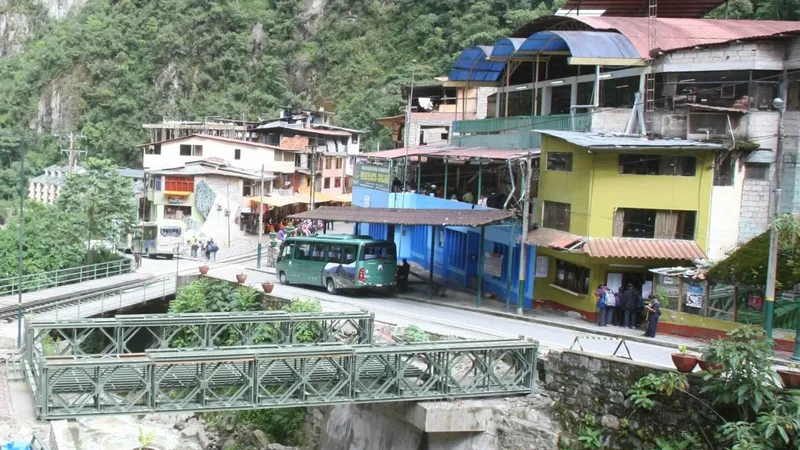
Peru & U's local partner reserves your one-way or round-trip bus ticket between Aguas Calientes and the Machu Picchu citadel gate and emails it to you, skipping the ticket-booth line in town. It's non-refundable once booked, so pick your date carefully.
Check Availability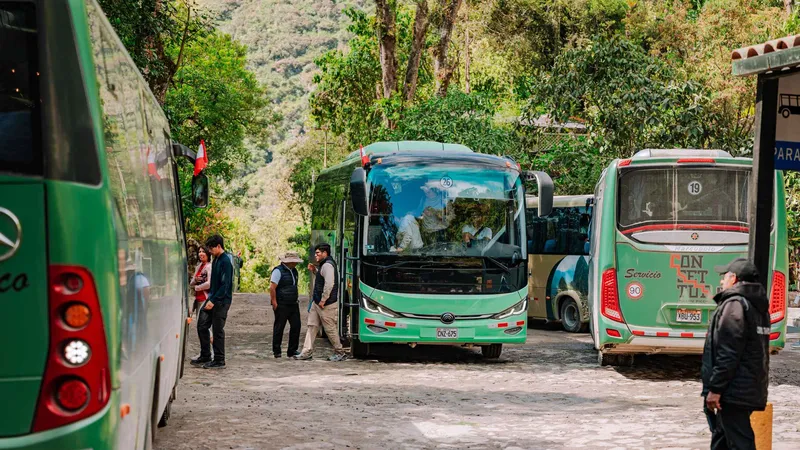 from $19.00
From Aguas Calientes: Official Machu Picchu Bus Tickets
Peru Trekkers books the official round-trip bus between Aguas Calientes and the Machu Picchu entrance for you, with buses running all day so you can board flexibly. Cancel up to 24 hours ahead for a full refund.
Check Availability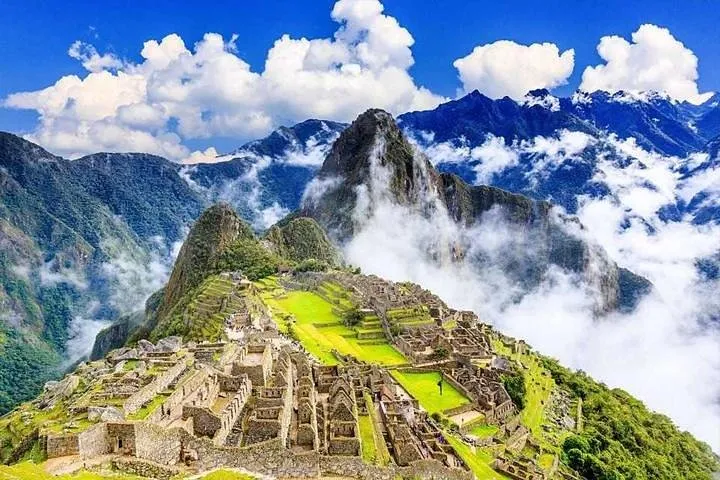 from $43.00
Machu Picchu Entrance Ticket
MachuPicchu.Center sells the official entrance ticket alone for the circuit you choose, with the private guide and bus only bundled in on the separate 2-day Circuit 2 commitment option. All sales are final, so double-check your date and circuit before paying.
Check AvailabilityPrices, ratings and details are the platform's own. Dollar figures are the listed prices. The platform bills in your account's currency.
While You Are in Town
Bus to Machu Picchu
The full breakdown of bus tickets, the operator's own tariff and the second-operator report.
Things to Do in Aguas Calientes
What else fills a day in town before or after the climb.
Aguas Calientes to Machu Picchu: Questions
How do I get to Machu Picchu from Aguas Calientes?
Two ways. The shuttle bus climbs the Hiram Bingham road, a switchback dirt and gravel road, in about 25 minutes. Or you take the signed walking path, about 90 minutes of steady climbing through about 390 m of elevation. Booked bus transfer runs US$19.00 one-way or round-trip, and the entrance ticket itself is US$43.00, bought separately.
How long does it take to walk from Aguas Calientes to Machu Picchu?
About 90 minutes, a figure from Wikipedia rather than an official source. No official body publishes the exact distance, the trail surface condition or whether the path is lit. The climb is about 390 m from the town at roughly 2,040 m to the gate at 2,430 m, so allow more time in rain or if you are not acclimatised.
Is it worth staying in Aguas Calientes?
For early entry slots, yes, because you wake up minutes from the bus station instead of catching a pre-dawn train. The town also has hot springs, restaurants and the site museum within reach. We weigh the full case, including the downsides, on is Aguas Calientes worth visiting.
When should I avoid Machu Picchu?
The rainy season in this valley runs from November to March, when the walking path gets slick and views are less reliable. The busiest stretches are the high-demand window from 1 June to 15 October plus 30 and 31 December, when daily capacity rises to 5,600 visitors and tolerance widens to 45 minutes. The month-by-month tradeoffs are on best time to visit Machu Picchu.
Do I need both a bus ticket and an entrance ticket?
The entrance ticket is always required, sold by hourly slot from 06:00 to 15:00. The bus ticket is only needed if you choose not to walk the 90-minute path. They are separate purchases: the entrance ticket is US$43.00 and the bus transfer is US$19.00, so budget US$62.00 for the full bus-up version of the day.
See Both Routes Before You Go
Walking and bus accounts of the climb from Aguas Calientes to the gate.
Aguas Calientes, Peru: Walking Around the Gateway to Machu Picchu
A walking tour of Aguas Calientes town, useful for orienting yourself before the climb.
Video: Walking ExpeditionWalk from Aguas Calientes to Machu Picchu
A rider's-eye account of the signed walking path up to the gate.
Video: peace1234allWalking from Ollantaytambo to Machu Picchu (Aguas Calientes)
A longer walk into town, useful context for the final climb.
Video: The PilgrimPrices, hours and terms are set by the venue or operator and confirmed at checkout.
We may earn a commission if you book through one of our links, at no extra cost to you. Full affiliate disclosure