 Aguas Calientes City Guide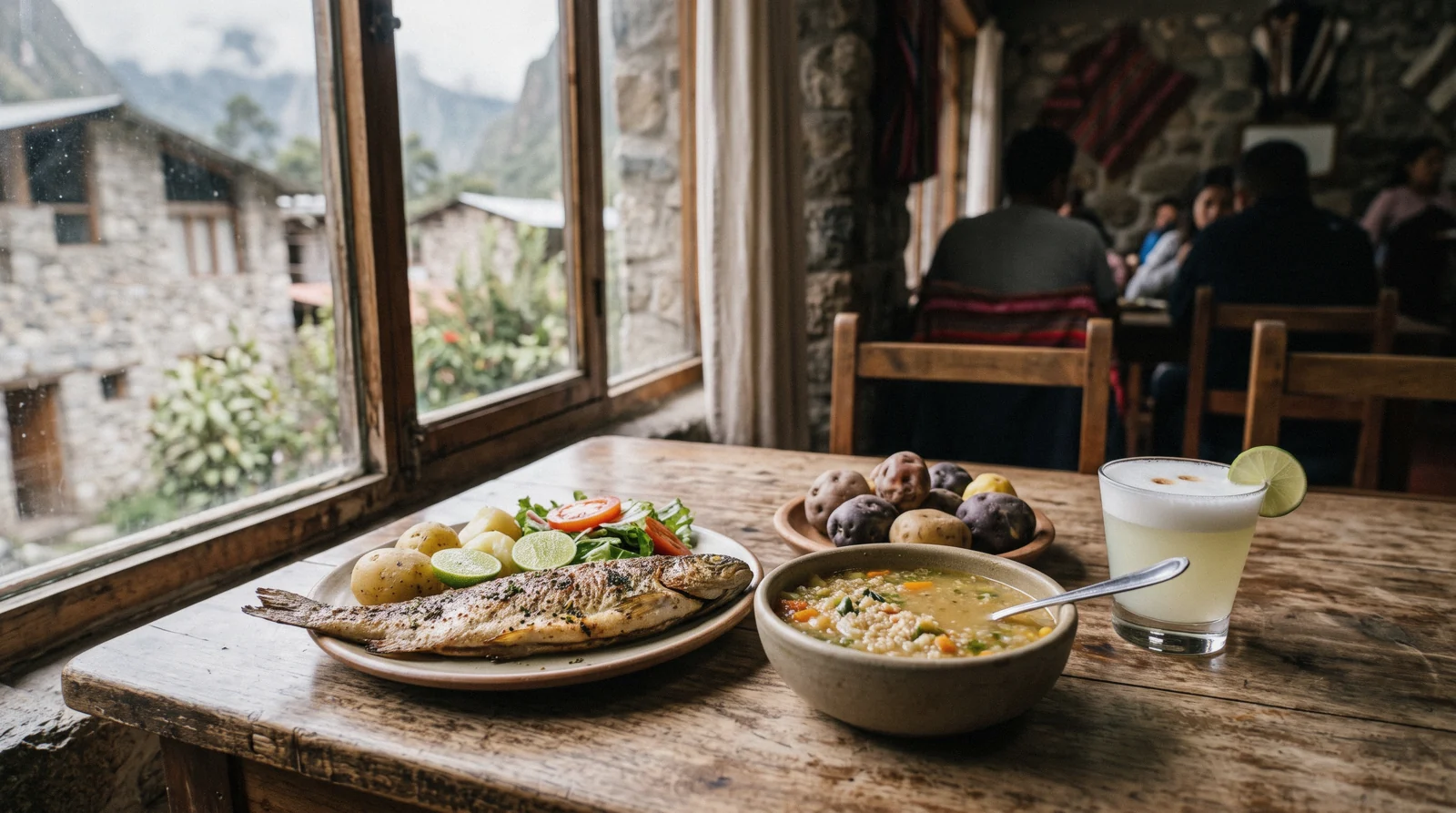
What to Eat in Aguas Calientes: Andean Food, Not Coastal
What to eat in Aguas Calientes is a highland question, not a coastal one. Aguas Calientes sits in a highland river valley below Machu Picchu, and its kitchen belongs to the Andes. That sounds obvious until you start reading about Peruvian food, because most coverage of the country's cuisine leads with ceviche, a dish of raw saltwater fish cured in lime juice. Ceviche is a coastal dish. It comes from Peru's Pacific shore, hundreds of kilometres from this town, and no amount of hotel menu decoration changes that. What the Andes actually cook here is different: trout from regional fisheries, quinoa, potatoes in many forms, and cuy, guinea pig, a protein the highlands have raised for centuries. Alongside the food comes pisco sour, the national cocktail, poured in bars and dining rooms across town. This page tells you what each dish is, where it comes from and what to expect when you order it. For the venues themselves, with sourced details on each one, see where to eat in Aguas Calientes. For what to do before and after the meal, check things to do in Aguas Calientes.
Quick answer What should I eat in Aguas Calientes?
Eat Andean food in Aguas Calientes: trout raised in regional fisheries, quinoa, pachamanca and cuy, guinea pig, a traditional highland dish. Pisco sour, the national cocktail, is served across town. Ceviche is coastal, not local.
Key takeaways
- Ceviche is a coastal dish made with saltwater fish, hundreds of kilometres from the Andes. Per Wikipedia's coverage of Peruvian cuisine, it is not what highland kitchens are known for, so do not come here expecting it to be a local speciality.
- Highland staples worth ordering include cuy (guinea pig, often served whole or fried as cuy chactado), trout, quinoa and pachamanca, meat and vegetables slow-cooked underground on heated stones.
- For the sourced picture of individual venues, opening times and the one bookable sit-down lunch, see where to eat. Pair a meal with things to do around town, or browse Aguas Calientes tours if you want the food worked into a plan.
Andean Food, Not Coastal Food
Peru has one of the most discussed kitchens in the Americas, but it is not one kitchen. The coast, the Andes and the Amazon cook differently, and Aguas Calientes sits firmly in the highland tradition. Knowing the difference saves you from ordering the wrong thing for the wrong reason.
Why Ceviche Is Not the Local Dish
Ceviche is Peru's flagship dish, raw fish marinated in lime juice with Andean chili peppers and onions, and the marinade is called leche de tigre. Per Wikipedia's article on Peruvian cuisine, it is a coastal dish, built on saltwater fish caught off the Pacific shore. Aguas Calientes sits at high altitude beside a mountain river, far from any ocean fishery, so the dish has no roots here.
In December 2023 UNESCO inscribed the practices and meanings associated with the preparation and consumption of Peruvian ceviche on the Representative List of the Intangible Cultural Heritage of Humanity, the first culinary inscription for Peru covering the whole country. That is a real honour, and it is worth knowing about. But read the inscription carefully: it recognises ceviche as a national coastal practice, not a highland one. It does not make ceviche an Aguas Calientes speciality, and it does not mean the trout-stream town below Machu Picchu is where the dish belongs. Some menus in tourist towns list ceviche anyway because visitors ask for it. If you want the dish as Peruvians mean it, the coast is its home. If you want what this region actually cooks, keep reading.
What the Andes Actually Cook
The highland kitchen is built on what grows and swims at altitude. Per Wikipedia, trout is the main freshwater fish in Andean cooking, raised locally in regional fisheries, so a trout plate in Aguas Calientes is genuinely local sourcing rather than a transported import. Quinoa is an ancient Andean grain and an excellent source of essential amino acids. Potatoes come from the Andes in the first place, the crop's original home, and they appear in soups, stews and side dishes across the region.
Then there is cuy, guinea pig, which many visitors find surprising and many Peruvians find ordinary. Per Wikipedia, cuy is traditional Andean fare, often served whole, and indigenous highland women traditionally raise the animals in their homes. It shows up in pachamanca, the underground stone-cooked feast, and fried as cuy chactado. These four, trout, quinoa, potato and cuy, are the honest answer to what to eat in Aguas Calientes. Everything else on this page is detail on how they arrive at the table.
Five Dishes to Know Before You Order
Menus in town mix local highland cooking with dishes borrowed from other Peruvian regions. These are the names worth recognising before you sit down.
Cuy, Guinea Pig
Cuy is guinea pig, and in the Peruvian Andes it is livestock, not a pet. Per Wikipedia's coverage of Peruvian cuisine, cuy is traditional Andean fare, often served whole, bones and all, so first-time eaters should know the animal arrives recognisable. Indigenous highland women traditionally raise guinea pigs in their homes, which is why the dish reads as everyday highland food rather than a restaurant novelty in Cusco-region towns.
Two preparations come up most. One is cuy chactado, fried guinea pig pressed flat. The other is cuy as a filling, because Wikipedia notes that modern Andean kitchens use the meat in dishes like tacos and ravioli, which can be an easier entry point for hesitant visitors.
Cuy also appears in pachamanca, the underground feast described below. The flavour is often compared to dark poultry, though any claim about taste is yours to test. If you order it, order it in a highland town like this one, where the tradition is genuine.
Trout From the Regional Fisheries
Trout, trucha on menus, is the most reliable fish order in the highlands. Per Wikipedia, trout is the main freshwater fish in Andean cooking, raised locally in regional fisheries, which is why it appears on so many menus in river towns near Machu Picchu. The fish suits the geography.
The coast is a flight away, but cold Andean rivers and fish farms are next door, so trout arrives fresher than any ocean fish can. Preparations vary by kitchen. Grilled whole trout with rice and salad is the common form, and some kitchens serve it in soups.
The dish is also a sensible fallback for travellers who want fish without the coastal question mark, since this is the fish the region actually produces. It pairs naturally with the other highland staples on this page, and it is usually the mildest way into Andean cooking if cuy sounds like too much on day one. Ask how it is cooked if the menu is vague, because fillet and whole fish eat very differently.
Quinoa, an Andean Grain
Quinoa is the grain the Andes gave the world, and eating it here is eating it at the source. Per Wikipedia, quinoa is an ancient Andean grain and an excellent source of essential amino acids, which is a large part of why it became a global health food. One detail travellers enjoy repeating: NASA has used quinoa in astronaut meals since 1985.
The grain appears in soups, in salads and as a side across the Cusco region, and it is often one of the few substantial options for vegetarian travellers in highland towns. Wikipedia also records the harder side of its fame. International commercialization raised awareness of quinoa but also raised prices and reduced crop biodiversity on indigenous lands, so the global boom had costs at home.
Ordering quinoa in an Andean town keeps the demand where the crop grows. If you see a quinoa soup on a cold evening at altitude, it does the job hot food at 2,000 metres is supposed to do.
Pachamanca, the Underground-Cooked Feast
Pachamanca is the most theatrical dish on any highland menu, and the method explains why. Per Wikipedia, pachamanca is meats, herbs and vegetables slow-cooked underground on a bed of heated stones, and it is traditionally prepared for celebrations rather than as an everyday plate. The name refers to the earth pot itself, and the cooking relies on hot stones buried with the food so everything steams in its own time.
Meats can include the highland proteins on this page, cuy among them, alongside Andean vegetables such as potatoes. Because of the labour involved, not every kitchen in Aguas Calientes runs pachamanca daily, and some places need advance notice to fire the stones. If you see it on a menu or a board outside a dining room, ask when the next cooking happens and whether a reservation is needed.
It is a shared, slow meal, so it suits a long lunch after a morning at the citadel better than a quick stop between trains.
Olluquito con Charqui and Rocoto Relleno
Two more names fill out the highland picture. Per Wikipedia, olluquito con charqui is a stew of olluco, a tuber native to the Andes, cooked with dried or cured meat and served with rice. Olluco looks like a small, colourful finger-length tuber and keeps the crispness of a vegetable in a stew. The dish is classic highland home cooking, the kind of plate that shows how many tubers the Andes grow beyond the potato.
Rocoto relleno is stuffed hot peppers, and honesty requires a note here. Per Wikipedia, the dish comes from Arequipa, a city in southern Peru far from Aguas Calientes. You may still find it on menus in town, because Peruvian restaurants routinely cook across regional lines, but it is an Arequipa dish served in the Andes, not a local speciality. The rocoto pepper looks a bit like a bell pepper and carries real heat, stuffed usually with meat and baked. Order it if you like spice, but credit Arequipa when you describe it afterwards.
Six Things on the Menu
Use this table as a quick menu decoder before you sit down. It separates what is genuinely highland from what gets imported onto menus for visitors.
| Dish or Drink | What It Is | Where It's From | Usually Served |
|---|---|---|---|
| Ceviche | Raw fish marinated in lime juice with Andean chili peppers and onions, the marinade called leche de tigre | Coast, not local, hundreds of kilometres from the Andes | Cold, as a starter or main |
| Cuy | Guinea pig, traditional Andean fare, often served whole or fried as cuy chactado | Andean highlands, animals traditionally raised in highland homes | Whole at the table, or as a filling |
| Trout | Freshwater fish, the main fish in Andean cooking, raised in regional fisheries | Andean rivers and fisheries near town | Grilled whole, or in soup |
| Quinoa | Ancient Andean grain, an excellent source of essential amino acids | Andean highlands, the crop's home | In soups, salads and sides |
| Pachamanca | Meats, herbs and vegetables slow-cooked underground on heated stones | Andean highlands, traditionally for celebrations | Shared, often needing advance notice |
| Pisco sour | Pisco grape brandy with lime juice, egg white and simple syrup | National cocktail of Peru | Cold, as an aperitif |
Per Wikipedia's Peruvian cuisine coverage, ceviche is a coastal dish and the rest of the table is highland cooking, so order accordingly.
Pisco Sour, the National Drink
One drink pairs with every dish above, and it carries official recognition of its own.
A Cocktail With Its Own National Day
The pisco sour is Peru's national cocktail. It is built on pisco, a grape brandy, mixed with lime juice, egg white and simple syrup, shaken into a short glass with a layer of foam on top. The egg white sounds unusual until you try it, where it gives the drink its texture, and the lime keeps it sharp rather than sweet.
Peru takes the drink seriously enough to put it on the calendar. Per tvperu.gob.pe and peru.info, PromPeru's own material, Peru marks the Dia Nacional del Pisco Sour on the first Saturday of every February, a date established in 2004. The recognition goes further back in law: in 2007 Peru's National Institute of Culture declared the pisco sour part of the Cultural Heritage of the Nation. For a traveller, the practical takeaways are simple. The drink is available in Aguas Calientes wherever drinks are poured, it is strong for its size, and it sits comfortably at altitude in a way heavy drinks do not. Aguas Calientes at night covers where the evening goes from there. Order one pisco sour with your trout or your cuy and you have covered the two questions most first-time visitors ask about Peruvian food and drink.
Where to Actually Order This
This page names dishes, not restaurants. Venue names, sourcing and hours belong to the eating guide, but here is how to plan the meal itself.
One Bookable Table, Otherwise Ask in Town
Most eating in Aguas Calientes works the same way it does in any small Peruvian tourist town. You walk, you read the boards, you sit down. There is no published, citable ranking of venues here to lean on, which the where to eat guide explains honestly. What this site does carry is one bookable sit-down option, for readers who want to try Andean food at a proper table without negotiating the strip: the Cafe Inkaterra lunch, a reserved table for Andean food mixed with contemporary dishes. It suits a planned long lunch after the citadel rather than a quick bite.
Timing matters more than choice of dish. Food is banned inside the Machu Picchu ruins, so plan your meal around your circuit slot rather than hoping to carry a snack up, a rule covered fully in Machu Picchu rules. The town's dining hours cluster around the train arrivals, so eating early or late gets you a quieter table. If you want pachamanca or cuy, ask the venue directly whether it is available that day, because both take more preparation than a grilled trout. And keep the coastal question in mind at the menu stage: a ceviche listing in a mountain town tells you about the kitchen's marketing, not its region.
Aguas Calientes Food: Questions
What food is Aguas Calientes known for?
The town's kitchen is highland Andean. Per Wikipedia's coverage of Peruvian cuisine, the staples of Andean cooking are trout, raised locally in regional fisheries, quinoa, potatoes and cuy, guinea pig, often served whole or fried as cuy chactado. Pachamanca, meats and vegetables slow-cooked underground on heated stones, is the traditional celebration dish of the highlands. Any menu here built on those ingredients is cooking the food of this region.
Is ceviche a local Machu Picchu dish?
No. Per Wikipedia, ceviche is a coastal dish, raw saltwater fish marinated in lime juice with Andean chili peppers and onions, and the Pacific coast is hundreds of kilometres from the Andes. UNESCO inscribed the practices and meanings around Peruvian ceviche on its Intangible Cultural Heritage list in December 2023, the first culinary inscription for Peru, but that recognition is national and coastal in nature. It does not make ceviche a highland speciality or a local dish in Aguas Calientes.
What is a pisco sour and when is its national day?
A pisco sour is Peru's national cocktail, made with pisco, a grape brandy, plus lime juice, egg white and simple syrup. Per tvperu.gob.pe and peru.info, Peru marks the Dia Nacional del Pisco Sour on the first Saturday of every February, a date established in 2004, and in 2007 the National Institute of Culture declared the drink part of the Cultural Heritage of the Nation.
Can I eat guinea pig near Machu Picchu?
Yes. Cuy is traditional Andean fare, so it belongs to the kitchen of highland towns like Aguas Calientes. Per Wikipedia, it is often served whole, and indigenous highland women traditionally raise guinea pigs in their homes. It also appears in pachamanca and, in modern kitchens, as a filling in dishes like tacos and ravioli. This page names no specific venue, so check the eating guide for where to sit down and ask the kitchen which cuy preparations they run.
Andean Food on Video
Three video looks before you go.
South American Food - EXOTIC DELICACY in Cusco, Peru! | Peruvian Food Tour!
A food tour through Cusco-region highland dishes.
Video: Mark WiensTrying Cuy (Guinea Pig) in Cusco, Peru: Traditional Andean Food Experience
A first-hand look at the cuy dish described on this page.
Video: Samuel and Audrey8,000 Year-Old Barbecue Style: Ancient Inca Food in Peru
A look at pachamanca, the underground-cooked highland feast.
Video: Mark WiensVideos load from YouTube only when you press play.
Prices, hours and terms are set by the venue or operator and confirmed at checkout.
We may earn a commission if you book through one of our links, at no extra cost to you. Full affiliate disclosure