 Aguas Calientes City Guide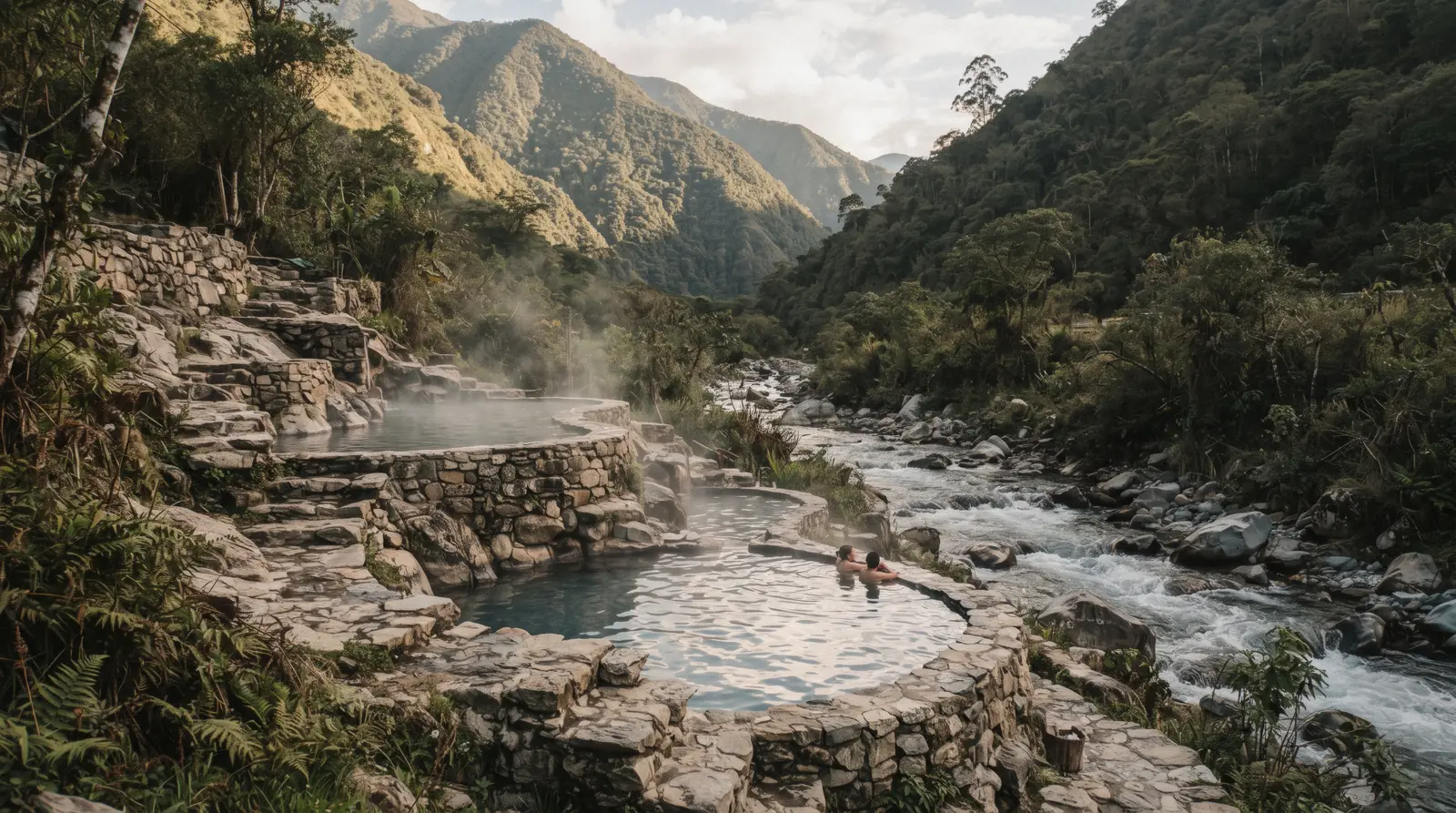
Santa Teresa Hot Springs: A Guide to Cocalmayo's Thermal Baths
The Santa Teresa hot springs, known locally as the Cocalmayo thermal baths, sit in the Santa Teresa district of the La Convencion Province in the Cusco Region. They are the bigger alternative to the small pools inside Aguas Calientes itself, and most visitors reach them on the overland route that runs through Santa Teresa toward Hidroelectrica. Trekkers on the Salkantay and Inca Jungle routes almost always stop here for a soak before the final push to Machu Picchu. This page is one stop on our day trips from Aguas Calientes. If you want the pools inside town instead, see our guide to the Aguas Calientes hot springs, which covers a separate and much smaller complex.
Quick answer The essentials on the Cocalmayo thermal baths
Cocalmayo is a thermal bath complex about 4 km from Santa Teresa town centre, on the right bank of the Vilcanota river at roughly 1,500 m altitude. Pool water ranges from about 32°C to 44°C depending on which pool you use, and the site is run by the Municipalidad Distrital de Santa Teresa.
Key takeaways
- There is no published official entry fee or hours. We explain what is and is not known in the tickets section.
- Most travellers reach it overland via Hidroelectrica on the way to or from Aguas Calientes.
- Trekkers on the Salkantay trek and the Inca Jungle trek pass through Santa Teresa, which is why the pools get busy.
Key facts
Opening hours
| Pools | Not published on any official page–not stated |
|---|
Closed not stated
Planning it
- Time needed
- Half a day including travel from Santa Teresa town, longer if you arrive as part of a trek itinerary
- Address
- Santa Teresa District, La Convencion Province, Cusco Region, Peru
Getting Into the Springs
Start with the negative finding, said once and plainly: no official municipal page publishing a current entry fee or opening hours for the Cocalmayo pools was located and fetched in this pass. We tried the Municipalidad Distrital de Santa Teresa's own domain, munisantateresa.gob.pe, and it redirects to a gob.pe institutional page with no tariff content. So we cannot print a price or a timetable as official, and any figure you see elsewhere should be treated as unverified until you confirm it at the gate. This site sells no ticket for the springs either, because no bookable product exists for them.
There is nothing here to buy through this site, so this table is an honest list of what is known and what is not about paying at the gate.
| Option | Price | Covers | Booking | Book |
|---|---|---|---|---|
| The Municipalidad Distrital de Santa Teresa's own pools, administered by the district municipalityAnyone visiting the pools directly | No confirmed fee. No official page publishing a current entry price was located in this pass, so no figure can be printed here | Access to the thermal bath complex on the Vilcanota river bank. What the payment covers on site is not stated | No advance booking needed and none available. Pay on arrival, and check the municipality's institutional page for any published notices | Official site |
Sources: Wikidata Q105122163 and Spanish Wikipedia (Baños termales de Cocalmayo) for what the site is, plus an attempted fetch of the municipal domain that found no fee or hours.
Treks That Pass Near the Springs
This site sells no ticket for the springs themselves. The two multi-day treks below are the bookable products that route travellers through the Santa Teresa area on the way to Hidroelectrica and Aguas Calientes, and a soak here is a common stop on both.
 from $649.00
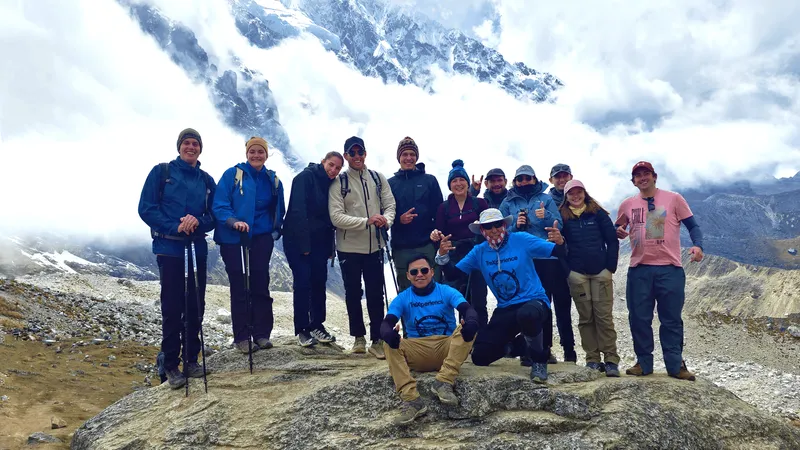
Machu Picchu: 5-Day Salkantay Trek with Panoramic Train
TreXperience crosses the Salkantay Pass past the turquoise Humantay Lake, with glamping and a campsite overlooking Machu Picchu at Llactapata, a Pachamanca feast and coffee tasting along the way, then returns on the panoramic Vistadome or 360-degree train. Small group, capped at 16, and non-refundable once booked.
Check Availability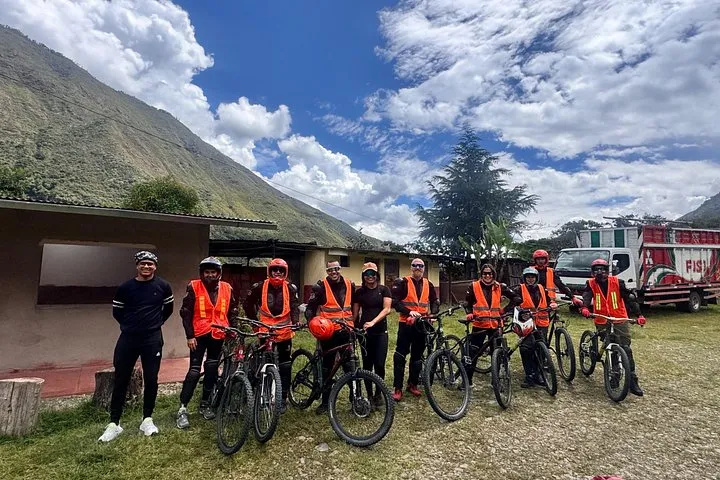 from $429.00
4-Day Inca Jungle Trek to Machu Picchu: Biking, Rafting & Zipline
Encuentros Peru Adventure bikes down from Abra Malaga, hikes through cloud forest and jungle, and includes 3 nights of accommodation, full-suspension mountain bikes with pads and helmet, and all meals. Rafting and ziplining are optional add-ons at roughly $40 more, not part of the base price.
rafting and zipline are optional extras, roughly $40 more, not included in the base $429 price
Check AvailabilityPrices, ratings and details are the platform's own. Dollar figures are the listed prices. The platform bills in your account's currency.
What the Springs Are Like
The Pools and the Water
Cocalmayo is a thermal bath complex built along the right bank of the Vilcanota river, at an altitude of about 1,500 m in the Santa Teresa district. The water coming out of the ground is hot enough that the different pools hold different temperatures, ranging between about 32°C and 44°C depending on the specific pool you settle into. That spread is useful in practice.
After a long day on the Salkantay route or a dusty descent on a bicycle tour, you can start in a milder pool and work your way hotter, or skip straight to the hottest one if your legs demand it. Because the complex sits right beside the river, you get the sound of moving water the whole time you soak. The setting is a deep green valley rather than a plateau view, and the air at this altitude is warmer than in Cusco, which makes the contrast between the hot water and the evening air pleasant rather than shocking.
The Spanish Wikipedia article on the baths is the source for both the temperature range and the river-bank location, and we name it here because so little else about the site is officially documented.
Who Runs It and How It Is Managed
The Municipalidad Distrital de Santa Teresa administers the site. That is one of only two administration facts we could confirm, both coming from the Spanish Wikipedia article on the baths, the other being the water temperature range described above. The same source explains how the complex fits into the wider region.
It developed as tourist infrastructure alongside the district's own role as an alternative access point toward Machu Picchu, which is exactly why so many travellers find themselves here. Santa Teresa sits on the overland chain that runs from Cusco through Santa Maria toward Hidroelectrica, and the baths became the natural rest stop for people making that journey. The site has faced real physical pressure from the river it sits beside.
In February 2020, flooding on the Vilcanota prompted protection and channel-redirection works intended to safeguard the facility. That episode is worth knowing about for two reasons. It tells you the river is powerful and the banks can shift, and it tells you the municipality has invested in keeping the baths operating rather than letting flood damage close them.
What Is Not Documented
Honesty helps here more than padding. Beyond the location, the altitude, the temperature range, the administering municipality and the 2020 flood works, almost nothing about the site is published on any official page we could locate and fetch. No official municipal page publishing a current entry fee or opening hours was found in this pass.
We are not going to invent changing-room counts, towel rental prices, food options or pool numbers, because no source in our pack states them. What we can say is practical and sourced. The complex is about 4 km from Santa Teresa town centre, which is close enough for a local taxi or a walk along the road, and far enough that you should plan the trip out and back rather than assume you can pop over.
Ask at your hostel in Santa Teresa for the current gate price when you arrive, since local knowledge will always beat an unverified online figure. If a blog quotes you an exact entrance amount, treat it as a rumour until a ticket window confirms it. Once you are back in Aguas Calientes, things to do in Aguas Calientes picks up the rest of the trip.
Source: Wikipedia (Spanish, Baños termales de Cocalmayo), checked 2026-09-25.
How Santa Teresa Became a Stop on the Way to Machu Picchu
A District Built Around an Alternative Route
The story of the Cocalmayo baths is the story of Santa Teresa's position on the map. The district sits in the La Convencion Province of the Cusco Region, in the valley of the Vilcanota river, downstream and around the mountain from Machu Picchu. When train capacity and ticket prices on the standard Ollantaytambo to Aguas Calientes line made the official route expensive, an overland alternative grew up through Santa Maria and Santa Teresa to the railhead at Hidroelectrica.
Wikidata and Spanish Wikipedia both describe the baths as tourist infrastructure that developed alongside that alternative access role, so the two grew together. The district became the overnight stop, the baths became its main attraction, and independent travellers and trekking companies alike built a soak at Cocalmayo into their itineraries. The February 2020 floods showed the risk of building on a river bank in a steep valley, but the protection and channel-redirection works carried out after that flooding also showed local commitment to keeping the complex alive.
Today the baths are one of the best-known stops on the whole overland approach to Machu Picchu, even though the paperwork behind them, in the form of published fees and hours, remains thin.
Reaching Santa Teresa From Aguas Calientes
The Overland Chain via Hidroelectrica
Aguas Calientes has no road access, so getting to the Santa Teresa hot springs always involves legs of different kinds. The classic overland chain that most travellers use runs from Cusco to Santa Maria to Santa Teresa to Hidroelectrica by informal bus and shared taxi, known locally as colectivos. An important warning accompanies that chain.
No official transport authority publishes fares or a schedule for it, so the whole thing is informal and unregulated. Prices are negotiated on the spot and timetables bend around demand. We deliberately name no fare for any leg.
From Hidroelectrica, the onward leg to Aguas Calientes is the short train ride covered on our Hidroelectrica page, which carries the transport detail rather than repeating it here. Travelling in the other direction, from Aguas Calientes toward the springs, you take that same train back to Hidroelectrica and then pick up road transport along the chain toward Santa Teresa. Our page comparing Hidroelectrica or the train walks through that choice in more depth.
Bear in mind that road blocks and transport strikes can suspend the road legs at short notice, so leave buffer time if you have a fixed Machu Picchu entry slot.
Arriving on Foot With a Trek
A large share of the people who soak at Cocalmayo arrive under their own steam, because both of the main alternative walking routes pass through or near Santa Teresa on the way to Hidroelectrica. The Salkantay trek crosses from the high country down into the warm valley and typically uses Santa Teresa as a camp or hostel stop before the final stretch to the railhead. The Inca Jungle trek mixes mountain biking and hiking along much the same corridor and likewise funnels through the district.
Both itineraries treat an afternoon in the thermal pools as part of the plan, since a hot soak after days of descending into the valley is exactly what tired legs want. The day-by-day detail and the actual bookable cards for those routes live on their own dedicated pages, so this page does not try to sell you a trek. If you are comparing approaches to Machu Picchu more broadly, our overview of Machu Picchu treks puts the walking options side by side, our page on the Machu Picchu train covers the conventional rail alternative that most of these routes bypass, and Aguas Calientes tours lists guided options for the ruins visit itself.
From Santa Teresa Town to the Pools
Once you are in Santa Teresa town, the last leg is short. The baths sit about 4 km from the town centre on the right bank of the Vilcanota river, close enough that local transport makes the trip routinely and walkers do it along the road. No official schedule for this local hop exists in our sources, so treat it the same way as the rest of the chain.
Ask where the transport leaves from, agree the price before you get in, and confirm a pickup time for the return if you are visiting in the evening. The site's coordinates, -13.109601, -72.6007086, will get you there on any mapping app if you decide to walk. Give yourself time on site as well as travel time.
A soak, a change of clothes and the return leg add up to the better part of a day out of Santa Teresa, and travellers coming from or going to Hidroelectrica on the same day should build the baths in as a deliberate stop rather than an afterthought.
Santa Teresa Hot Springs on the Map
Near Santa Teresa
Hidroelectrica
The rail-and-road interchange most travellers use on this route, with the roughly 30 minute train leg to Aguas Calientes and details of how the interchange works.
Aguas Calientes Hot Springs
The smaller thermal pools inside Aguas Calientes town itself. A different complex from Cocalmayo and a convenient soak if you are staying in town.
Day Trips From Aguas Calientes
The full hub of outings from town, including this one, with the walking and transport options around the Machu Picchu valley.
Santa Teresa Hot Springs Questions
How hot is the water at the Cocalmayo hot springs?
The water ranges between about 32°C and 44°C depending on the specific pool, according to the Spanish Wikipedia article on the baths. Different pools hold different temperatures, so you can choose how hot you soak.
How much does it cost to enter the Santa Teresa hot springs?
No official figure could be confirmed. No official municipal page publishing a current entry fee was located and fetched in this pass, and the municipality's own domain redirects to an institutional page with no tariff content. Ask at the gate or at your accommodation in Santa Teresa for the current price.
What are the opening hours?
Not stated. No official source publishing opening hours for the Cocalmayo pools was found in this pass. Plan around daylight and confirm locally on arrival.
Who runs the Santa Teresa hot springs?
The Municipalidad Distrital de Santa Teresa administers the site. That fact and the water temperature range are the only administration details confirmed, both from the Spanish Wikipedia article on the baths.
How far are the springs from Santa Teresa town?
About 4 km from the town centre, on the right bank of the Vilcanota river. The complex sits at coordinates -13.109601, -72.6007086, at roughly 1,500 m altitude.
Can I visit the springs on the way to Machu Picchu?
Yes, and most visitors do exactly that. The district developed as an alternative access point toward Machu Picchu, and treks such as the Salkantay and Inca Jungle routes pass through or near Santa Teresa before continuing to Hidroelectrica and the short train ride to Aguas Calientes.
The Springs on Video
The Inca's Hot Springs! Visit Cocalmayo in Santa Teresa when travelling to Peru!
A first look at the Cocalmayo pools and the route in.
Video: Polsi JPCocalmayo hot springs | Santa theresa, Peru
The pools themselves, on the Vilcanota river bank.
Video: Formless 45Cocalmayo Hot Springs | How to get there and how much does it cost?
A practical look at reaching the springs from the Cusco side.
Video: Andrea MoriPrices, hours and terms are set by the venue or operator and confirmed at checkout.
We may earn a commission if you book through one of our links, at no extra cost to you. Full affiliate disclosure