 Aguas Calientes City Guide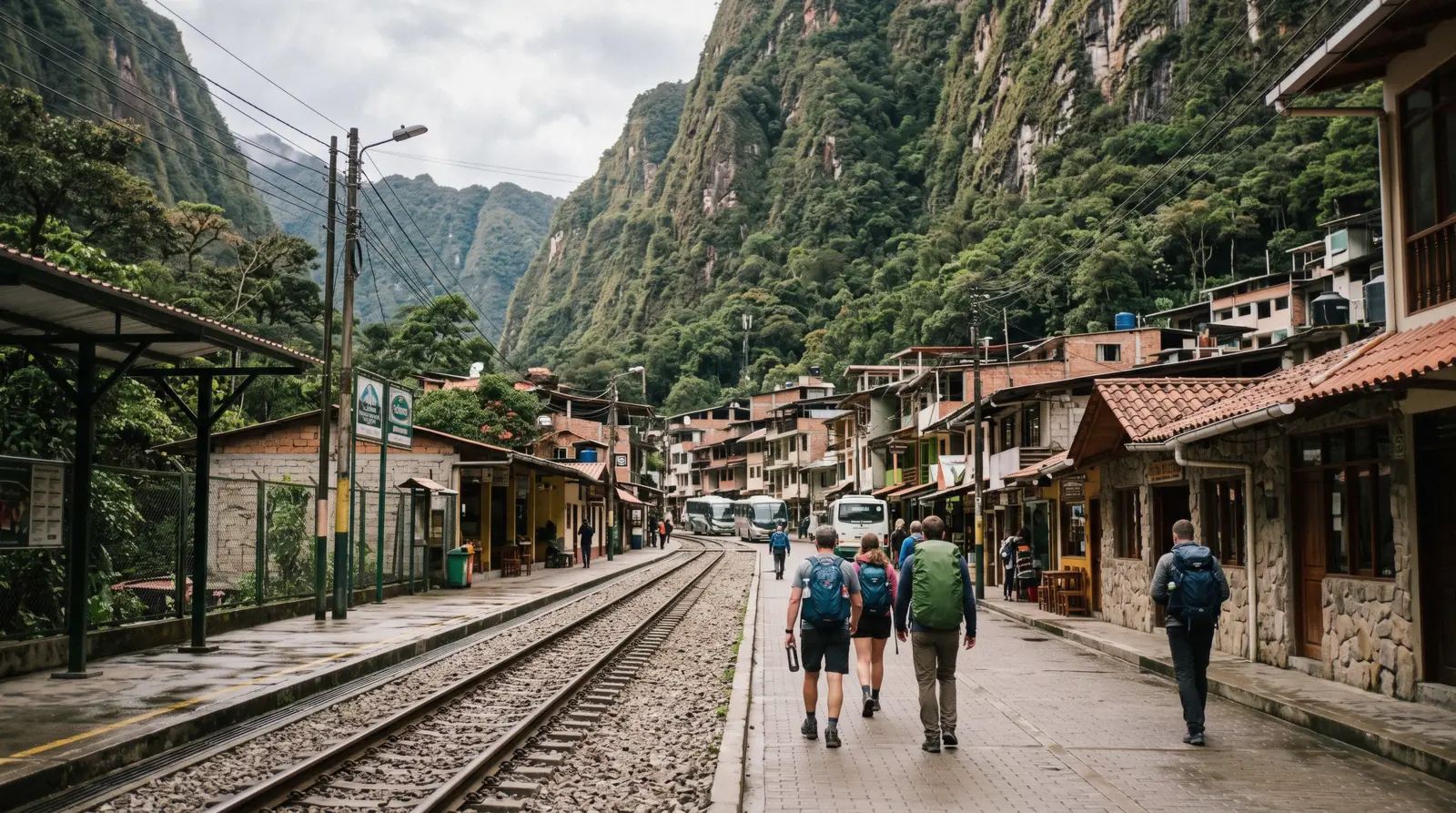
Aguas Calientes Travel Tips: Plan Your Machu Picchu Trip
These aguas calientes travel tips walk through every planning decision in order, starting with Aguas Calientes, officially Machupicchu Pueblo, the railway town at the bottom of the Urubamba gorge. It sits at about 2,040 m, directly below Machu Picchu, and no road reaches it. You arrive by train with PeruRail or Inca Rail, from Cusco or Ollantaytambo, or on foot at the end of a trek. From the town you go up to the ruins by bus or on foot. Since 1 June 2024 the ruins are split into 3 circuits and 10 routes with timed entry, so the ticket decision comes first. This page is the planning hub. It puts every practical decision in the order you actually face it: ticket, transport, money, altitude, rules, then itineraries. For a first read, start with the entry system on machu-picchu-tickets and the route up on aguas-calientes-to-machu-picchu. When you know your dates, our weather page and costs page tighten the budget. Every figure on this page comes from the source files behind the site.
Quick answer The five planning facts that matter first
The entrance ticket comes first. Our card sells the official ticket at US$43.00 and the bus transfer at US$19.00. Entry is by hourly slot from 06:00 to 15:00, split into 3 circuits and 10 routes since 1 June 2024. Standard time inside is 2 hours 30 minutes with no re-entry. The town sits at about 2,040 m, below CDC's moderate-altitude band, while Cusco at about 3,399 m is where altitude bites.
Key takeaways
- Read the route and circuit system on machu-picchu-circuits before choosing a slot.
- See what the town itself offers on things-to-do.
- Work the numbers on our costs page.
Getting There and Getting Up
Every route into Aguas Calientes ends in the same place: a narrow gorge town with a railway platform and a switchback road to the ruins. Plan the two legs separately. The train leg is about comfort and schedule. The town-to-gate leg is about tickets, queues and the choice between bus and stairs.
Arriving by Train
Two companies run the passenger line. PeruRail departs from San Pedro station in central Cusco and from Poroy station on the city edge, with stated journey times of 4 hours 30 minutes from San Pedro and 3 hours 30 minutes from Poroy to Machu Picchu station in the town. Inca Rail runs from Ollantaytambo, which most travellers reach by road from Cusco first.
PeruRail allows one carry-on piece per ticket of up to 8 kg or 17.64 lb and 115 linear cm. Inca Rail allows one piece up to 8 kg or 17 lb and 118 linear cm, and its carriages have no luggage racks, so pack for carrying. Inca Rail names its three tiers The Voyager, The Prime and The 360 Degree, and publishes live from-fares that change by date and demand, so never treat a quoted train price as fixed.
Trains drop you at Machu Picchu station in the town itself, not at the citadel. We compare the two companies in detail on perurail-or-inca-rail, and the cheaper overland alternative is covered on hidroelectrica-or-train. For the full journey from Cusco, see cusco-to-aguas-calientes, and for the short hop from the Sacred Valley see ollantaytambo-to-aguas-calientes.
The Bus Up to the Ruins
The ride from the town to the citadel gate takes about 30 minutes on a switchback road. Consettur has published its tariff openly only once in recent years: the operator's 2022 tariff sheet, the last it published openly, lists a foreign adult at US$12.00 one way and US$24.00 round trip. A second operator, San Antonio de Torontoy, is reported since February 2026 amid a concession-renewal process, but that has not been confirmed on an official source, so plan around the tariff sheet and check locally on the day.
Our own card, the bus transfer, reserves the ticket for you at US$19.00 and emails it so you skip the booth queue in town. Walking up is the other option: per Wikipedia it is roughly 6 km and about 90 minutes, all uphill.
No Road, So Plan the Rail Risk
Because no road reaches the town, a rail stoppage cuts Aguas Calientes off. No specific strike schedule is published anywhere official, so only general advice applies: build a buffer day into your itinerary and watch local news in the days before you travel. We track the pattern on transport-strikes.
The same logic applies to your return train. A missed connection at the bottom of a gorge is not a problem you can solve with a taxi.
Arriving on Foot
Trekkers arrive at the town from two directions. The classic Inca Trail enters the citadel directly through the Sun Gate, so those walkers bypass the town on the final day. The short 1-day Route 5 from km 104 also finishes at the Sun Gate.
The Hidroelectrica route walks the rail line into town from the opposite side, usually arriving in the afternoon. Only SERNANP-licensed agencies may operate on the Inca Trail network, independent trekking is not permitted. SERNANP's published fees are US$86.00 (S/292) for adults on the 4 to 5 day routes and US$65.30 (S/222) on the 1-day Route 5 from km 104, separate from and additional to the citadel entry ticket.
Visiting hours on the network are 05:30 to 14:00, and Route 1, the classic, is 33.7 km from Piskacucho at km 82. Per Wikipedia, the trail closes every February for maintenance and cleaning, a fact Wikipedia relays and we attribute to Wikipedia. Full details are on inca-trail.
Money, Altitude and Timing
Three numbers shape this trip: what the ticket and bus cost, how high you sleep, and which month you pick. None of them is complicated. All of them reward deciding early, because the ticket system is strict about dates and names and offers no refunds outside force majeure.
What the Trip Costs
The entry ticket is the anchor purchase and it is not refundable, so we suggest buying it first and building the rest of the trip around it. Our own card, the entrance ticket, sells the official ticket at US$43.00 for the circuit you choose. If you also want a guide, the entry plus guided tour bundle at US$136.00 combines the official ticket with a 2 to 2.5-hour guided tour in a group of up to 9.
Official online sales run only through tuboleto.cultura.pe, with 1 to 5 tickets per order, and the ticket office in town sells up to 1,000 per day, valid for the next day only. The bus, the guided walk and the train stack on top: the group guided tour at US$30.00 is guide only, and the train card at US$130.00 covers the scenic rail leg. For a full budget with meals and extras, see aguas-calientes-costs.
Currency and Cash
Peru uses the sol. On the open reference feed used by this site, 1,000 sol equals US$294.36, which puts one US dollar at roughly 3.40 sol. Worked figures used across our pages: S/64 is US$18.84, S/112 is US$33.00, S/222 is US$65.30 and S/292 is US$86.00.
Card coverage in a town of this size is imperfect and no official source we found states how many ATMs operate there, so carry cash in sol for the bus booth, small shops and any local purchase. Do not assume a card machine will be working at 05:30 when the queue for the mountain forms.
Altitude: The Town Is the Easy Part
The CDC Yellow Book classifies moderate altitude as 2,450 to 3,050 m, high altitude as 3,050 to 3,650 m and very high altitude above 3,650 m. Aguas Calientes at about 2,040 m and the citadel gate at 2,430 m both sit below the moderate-altitude floor, so acute mountain sickness is not the risk here. Cusco, at about 3,399 m per Wikipedia, sits inside the high-altitude band, and that is where altitude actually bites.
CDC's cardinal symptom is headache, usually with loss of appetite, dizziness, fatigue, nausea or occasionally vomiting, typically starting 2 to 12 hours after arrival at elevation. CDC cites the Wilderness Medical Society in recommending you avoid sleeping above 2,750 m in a single day and gain no more than 500 m per night of sleeping altitude once above 3,000 m, with 2 to 3 nights around 2,450 to 2,750 m described as markedly protective. In practice that means acclimatise in the Sacred Valley or Cusco first, then descend into the gorge.
Our full breakdown is on aguas-calientes-altitude.
Which Month and Which Slot
SERNANP recommends April to October for the Sanctuary and calls November to March the rainy season. Our climate table, an ERA5 model grid cell for 1995 to 2024 and not a station reading, agrees: July is the driest month at 47 mm, December the wettest at 271 mm, with the January figure at 296 mm. Daytime highs barely move all year, from 19.7C in June and July to 21.1C in October.
The practical consequence is that the dry season trades smaller crowds for cooler mornings at the gate, while the wet season brings afternoon downpours and a greener gorge. We go month by month on best-time-to-visit-machu-picchu and aguas-calientes-weather. For the slot itself, entry runs hourly from 06:00 to 15:00, standard permanence is 2 hours 30 minutes with no re-entry except force majeure, tolerance is 30 minutes in regular months and 45 minutes from 1 June to 15 October and on 30 to 31 December, and mountain controls have none at all.
If your date shows nothing left, our advice is on machu-picchu-tickets-sold-out.
Rules, Safety and What Goes Wrong
Most ruined trips in this town fail on one of three things: the wrong bag, the wrong shoes or the wrong slot. The rulebook is strict and enforcement is expulsion without refund, so read it once before you pack.
What You Cannot Take In
The Ministry of Culture's conduct rules ban bags larger than 40x35x20 cm, food, tripods, selfie sticks and any extending mount, walking sticks, drones, hard-soled shoes and heels, strollers, smoking and vaping, and loud music or instruments. Running, jumping, lying down, climbing on walls and feeding animals are all prohibited, and violation means immediate expulsion without refund. A guide is described as recommended rather than mandatory in the regulation, but you must carry your ticket plus a passport, carne de extranjeria or diplomatic ID.
The ticket is valid only for the date and time purchased, with no date or name changes except a corrected mistyped passport or DNI number. Pack light, wear soft-soled shoes and leave the big camera rig in storage, which we cover on aguas-calientes-luggage-storage. The complete list is on machu-picchu-rules.
If It Rains or Something Slips
Rain is a planning input, not a disaster. The wettest months see rain on most days, so pack a shell and treat the schedule as portable: an afternoon shower in the gorge often clears in under an hour, and the town's indoor options fill up when it does not. We list them on rainy-day-aguas-calientes.
On safety, the gorge setting means steep wet paths and a fast river, so watch footing on the stone stairs and mind children near the water. No named health post or tourist police contact for the town was found on an official page in the sources behind this site, which is itself a reason to carry basic medication and travel insurance. Our fuller notes are on aguas-calientes-safety.
Planning Around Who You Are With
The right plan changes with the group. A day-tripper from Cusco, a family with young children and a trekker finishing the Inca Trail face different constraints on the same small map.
One Day or Overnight
A day trip is possible but compressed. The train from Cusco takes 4 hours 30 minutes from San Pedro or 3 hours 30 minutes from Poroy, so a same-day visit eats most of its daylight in transit, and the citadel closes at 17:30. An overnight lets you take an early slot, see the town's market and springs in the afternoon and return up for a second look if your ticket allows a mountain route.
We weigh the trade-off on stay-in-aguas-calientes-or-day-trip, and our ready-made schedules are on aguas-calientes-in-1-day and aguas-calientes-in-2-days. Sleeping in town also removes the last-train pressure, which matters because no road exists as a fallback.
Families, Trekkers and Special Routes
Strollers are banned inside the citadel, so families with small children should plan on carrying or walking, and the 30-minute bus ride replaces any long approach. We map the practical version on machu-picchu-with-kids. If you want the famous postcard view from above, the choice is between Huayna Picchu on Route 3-A and Machu Picchu Mountain on Route 1-A, each with fixed entry turns and summit returns due by 13:00, and no tolerance at the mountain controls.
We compare them on huayna-picchu-or-machu-picchu-mountain. Trekkers on the Inca Trail need a licensed agency and should book months ahead for the dry season. And if you are still deciding whether the whole detour is worth two days of your Peru itinerary, we argue it out on is-aguas-calientes-worth-visiting.
Every Planning Page, Grouped by Decision
This site covers each planning decision in depth on its own page. Here they are in the order you face them, so you can read straight down the list or jump to the one blocking you.
-
Cusco to Aguas Calientes
The full journey from Cusco, station by station and leg by leg.
-
Ollantaytambo to Aguas Calientes
The short train hop most travellers actually take, from the Sacred Valley.
-
Aguas Calientes to Machu Picchu
Bus versus the 90-minute walk up, with the ticket rules at the gate.
-
Aguas Calientes Train Station
What to expect when you step off the train in the town.
-
PeruRail or Inca Rail
The two operators compared on routes, luggage limits and service tiers.
-
Hidroelectrica or Train
The overland alternative that walks the rail line into town.
-
Transport Strikes
What happens when the rail stops, and how to build a buffer day.
-
Best Time to Visit Machu Picchu
Dry season versus rainy season, crowd levels and slot strategy.
-
Aguas Calientes Weather
Month-by-month temperature and rainfall for the gorge.
-
Aguas Calientes Costs
A full budget for the town, the ticket, the bus and the extras.
-
Is Aguas Calientes Worth Visiting
An honest case for and against the overnight stop.
-
Aguas Calientes Altitude
Why the gorge is the easy part of your trip and Cusco is not.
-
Machu Picchu Rules
The full banned-items and conduct list, straight from the regulation.
-
Aguas Calientes Safety
Practical safety notes for the town, the river and the paths.
-
Aguas Calientes Luggage Storage
Where to leave the bag that exceeds the 40x35x20 cm limit.
-
Rainy Day Aguas Calientes
Indoor and low-effort options when the afternoon rain arrives.
-
Aguas Calientes in 1 Day
A compressed single-day schedule that actually works.
-
Aguas Calientes in 2 Days
The overnight plan with an early slot and an unhurried afternoon.
-
Stay in Aguas Calientes or Day Trip
Sleeping in the gorge versus commuting from Cusco or Ollantaytambo.
-
Machu Picchu with Kids
Stroller bans, bus logistics and pacing for young children.
-
Machu Picchu Tickets Sold Out
What to do when your date shows no availability.
-
Huayna Picchu or Machu Picchu Mountain
The two mountain routes compared on entry turns, time limits and effort.
Book the First Two Things
The ticket and the bus are the two purchases every visitor makes. Our cards cover both. Figures current in Q3 2026.
 from $43.00
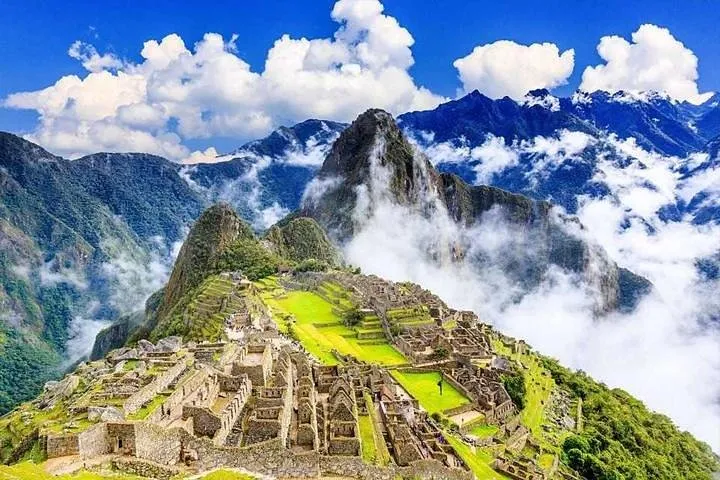
Machu Picchu Entrance Ticket
MachuPicchu.Center sells the official entrance ticket alone for the circuit you choose, with the private guide and bus only bundled in on the separate 2-day Circuit 2 commitment option. All sales are final, so double-check your date and circuit before paying.
Check Availability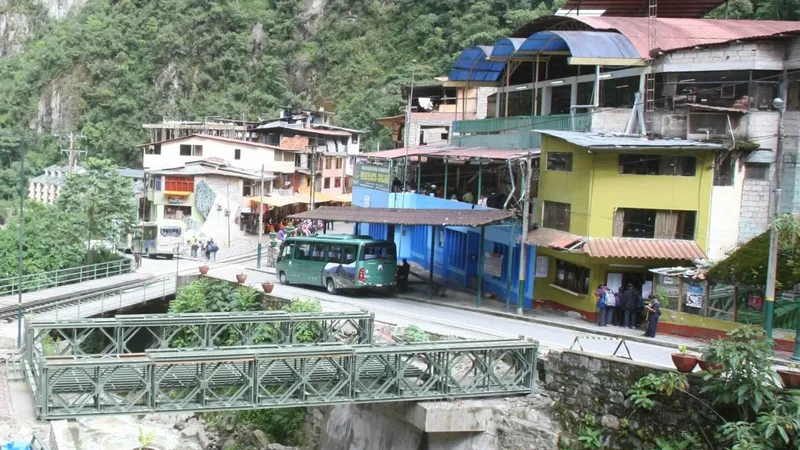 from $19.00
Aguas Calientes: Bus Transfer to Machu Picchu Citadel
Peru & U's local partner reserves your one-way or round-trip bus ticket between Aguas Calientes and the Machu Picchu citadel gate and emails it to you, skipping the ticket-booth line in town. It's non-refundable once booked, so pick your date carefully.
Check AvailabilityPrices, ratings and details are the platform's own. Dollar figures are the listed prices. The platform bills in your account's currency.
Where to Go Next
Once the logistics are settled, these pages take you deeper into the trip itself.
Our main guide to the citadel, its history and its UNESCO status, inscribed on 9 December 1983.
What to do in the town itself, from the hot springs that gave Aguas Calientes its name to the market.
Where to sleep if you choose the overnight plan.
Where to eat in town, from quick plates before the early bus to a proper dinner after.
Aguas Calientes Travel Tips: Questions
Do I need to book the Machu Picchu entrance ticket before I arrive in Aguas Calientes?
Yes. The ticket office in town sells up to 1,000 tickets per day and they are valid for the next day only, so a same-day plan that relies on buying at the office will usually fail. Official online sales run through tuboleto.cultura.pe with 1 to 5 tickets per order. Our planning page on machu-picchu-tickets walks through the options.
Is altitude sickness a problem in Aguas Calientes itself?
No. The CDC classifies moderate altitude as starting at 2,450 m, and the town sits at about 2,040 m with the citadel gate at 2,430 m, both below that floor. Cusco at about 3,399 m is inside the high-altitude band and is where symptoms typically appear. See aguas-calientes-altitude.
When is the best month to plan the visit?
SERNANP recommends April to October and calls November to March the rainy season. Our ERA5 climate table shows July as the driest month at 47 mm and December the wettest at 271 mm, with little seasonal change in daytime highs. Details are on best-time-to-visit-machu-picchu.
What happens if a strike stops the trains while I am in the gorge?
Because no road reaches Aguas Calientes, a rail stoppage cuts the town off until service resumes. No strike schedule is published, so the only sound advice is to keep a buffer day and follow local news. We explain the pattern on transport-strikes.
Can I bring my backpack and walking pole up to the ruins?
No. Bags larger than 40x35x20 cm and walking sticks are both banned inside the citadel, along with tripods, selfie sticks and food. Leave them in storage in town. The full list is on machu-picchu-rules.
Prices, hours and terms are set by the venue or operator and confirmed at checkout.
We may earn a commission if you book through one of our links, at no extra cost to you. Full affiliate disclosure